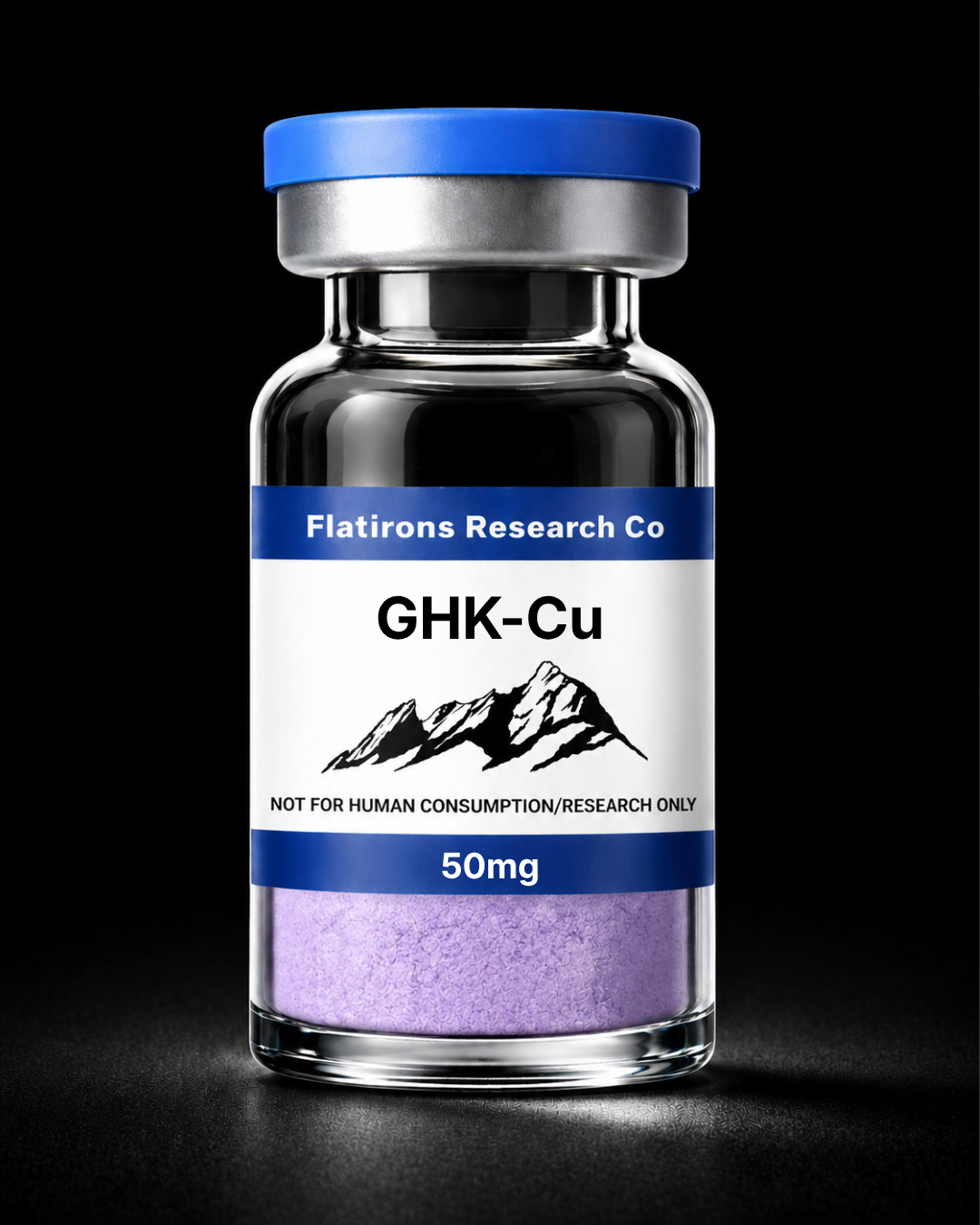
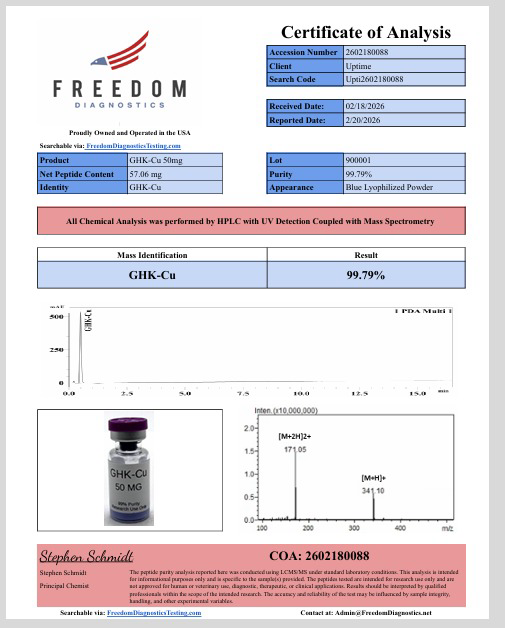
GHK-Cu, 50mg
$18.00
- Product Name: GHK-Cu
- Sequence: Gly-His-Lys
- Molecular Formula: C14H24N6O4
- Molecular Weight: 340.38 g/mol
- Research Only: Yes
- Form: Lyophilized Solid
- Storage: Keep refrigerated upon reconstitution
Availability: 29 in stock
We offer free shipping for orders over $400
GHK-Cu is a copper-binding peptide complex composed of the tripeptide glycine-histidine-lysine (GHK) and a copper ion. It occurs naturally in human plasma and has been studied in research settings for its interaction with cellular signaling pathways related to tissue dynamics, extracellular matrix regulation, and immune response.
Tissue and Skin Research
GHK-Cu has been investigated for its role in cellular processes associated with connective tissue and skin structure. Experimental studies have explored its interaction with pathways involved in collagen synthesis, extracellular matrix organization, and fibroblast activity. Research has also examined its association with signaling mechanisms that influence cellular turnover and structural protein regulation under controlled conditions.
In tissue-related models, GHK-Cu has been studied for its interaction with pathways associated with angiogenesis, cellular proliferation, and wound-related signaling processes. These findings are derived from preclinical models and remain context-dependent.
Pulmonary and Inflammatory Research
GHK-Cu has been examined in experimental models of pulmonary function and inflammatory signaling. Studies have explored its interaction with pathways related to oxidative stress, cytokine expression, and extracellular matrix remodeling in lung tissue under controlled conditions. These observations are based on laboratory and animal studies and require further validation.
Neurological Research
Research has investigated GHK-Cu in models related to neurobiological function and cellular stress responses. Experimental findings suggest potential interactions with pathways involved in protein aggregation, oxidative balance, and neuronal signaling. These studies are preliminary and not fully characterized across different neurological models.
Antimicrobial Research
GHK-Cu has also been studied in laboratory models for its interaction with microbial systems. Experimental work has explored its association with antibacterial activity in controlled environments, including studies utilizing nanoparticle formulations to assess stability and cellular interaction.
Gene Expression and Cellular Signaling
GHK-Cu has been widely examined for its influence on gene expression and intracellular signaling pathways. Research suggests it may interact with regulatory mechanisms involved in cellular maintenance, stress response, and tissue remodeling. These findings are based on preclinical investigations and remain under ongoing study.
GHK-Cu is not approved by the U.S. Food and Drug Administration for human use, and its safety, efficacy, and pharmacological profile have not been established in approved FDA clinical trials. It is not intended to diagnose, treat, cure, or prevent any disease.
Lyophilized Peptides
These peptides are freeze-dried, a process that not only extends shelf life but also preserves the purity and integrity of the peptides during storage.
Disclaimer: For Research Purposes only
This content is provided strictly for research purposes and does not constitute an endorsement or recommendation for the non-laboratory application or improper handling of peptides designed for research. The information, including discussions about specific peptides and their researched benefits, is presented for informational purposes only and must not be construed as health, clinical, or legal guidance, nor an encouragement for non-research use. Peptides described here are solely for use in structured scientific study by authorized individuals. We advise consulting with research experts, medical practitioners, or legal counsel prior to any decisions about obtaining or utilizing these peptides. The expectation of responsible, ethical utilization of this information for legitimate investigative and scholarly objectives is paramount. This notice is dynamic and governs all provided content on research peptides.