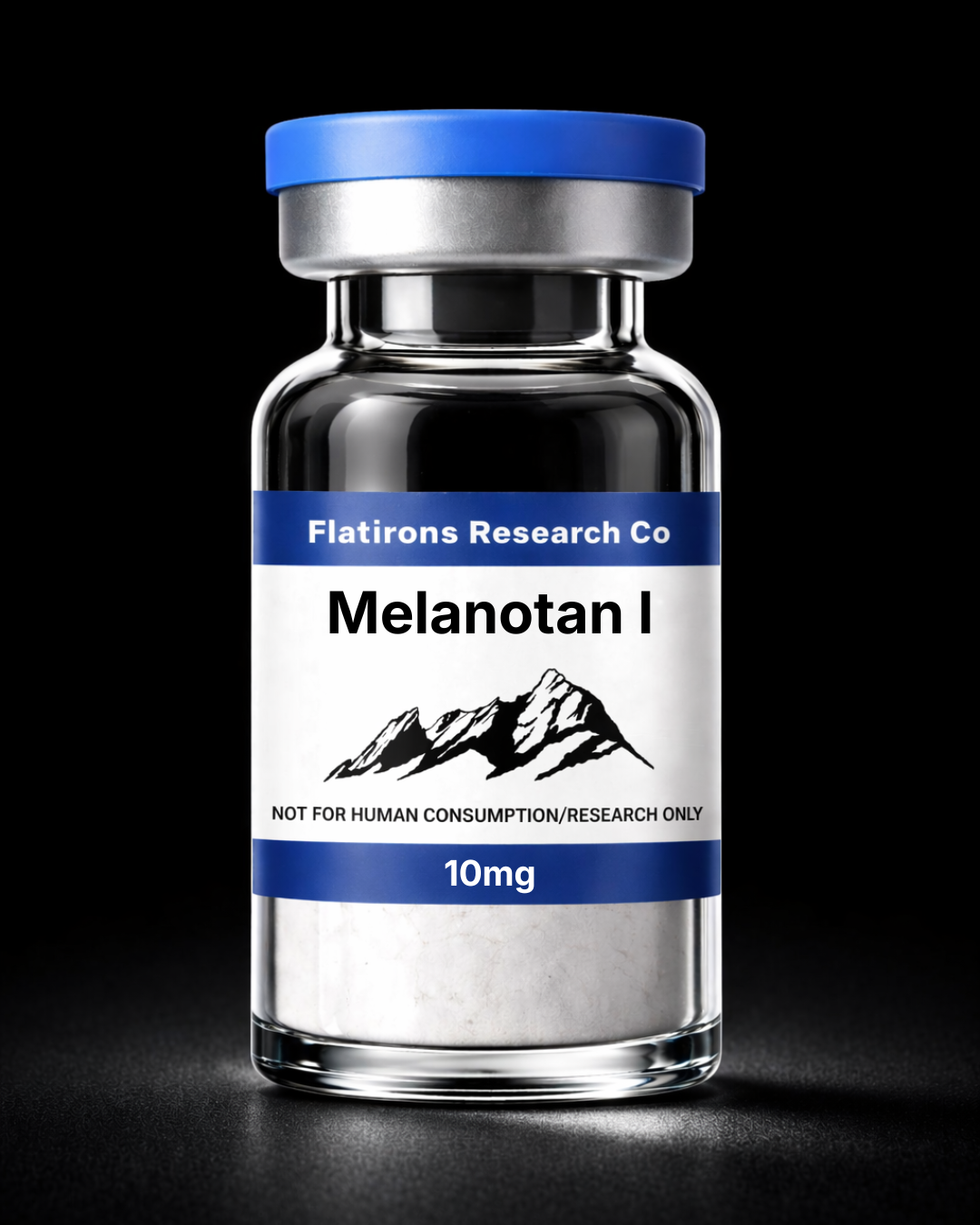
Melanotan 1, 10mg
$33.00
Melanotan 1, 10mg is supplied as a research material in lyophilized form and is intended exclusively for laboratory research and analytical applications. For laboratory research use only. Not for human or animal use.
Availability: 3 in stock
Melanotan 1, 10mg
Research Material | Laboratory Use Only
Melanotan 1, 10mg is supplied as a research material intended exclusively for laboratory research and analytical applications.
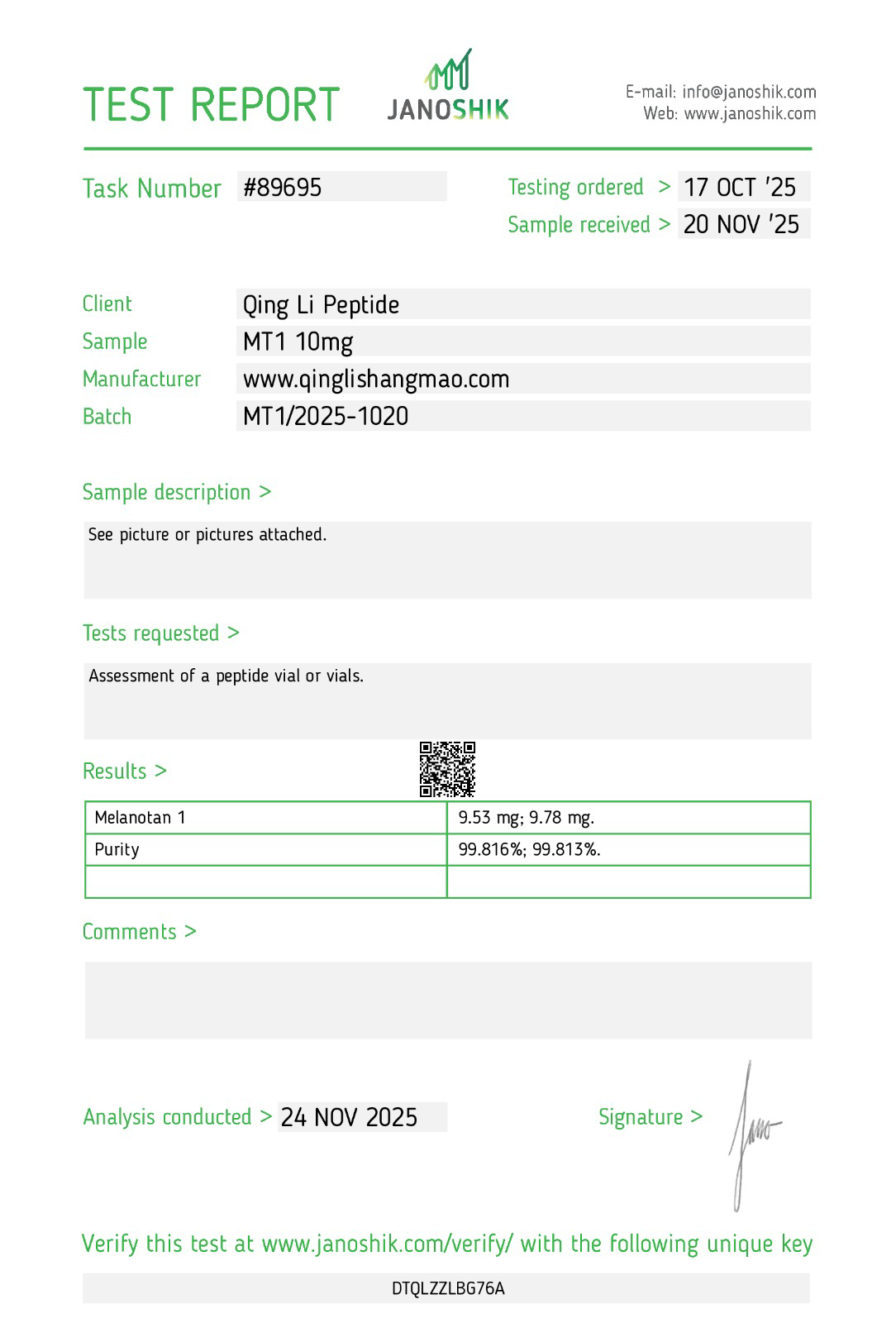
Batch-specific analytical testing is performed to evaluate applicable product specifications. Depending on the material and analytical methods employed, testing may include identity, purity, and/or content analysis. Researchers should review the documentation associated with the specific batch received to determine which analytical tests were performed and the corresponding results.
Each product includes batch identification to support traceability between the supplied material and its corresponding analytical documentation.
Product Information
- Product: Melanotan 1
- Nominal Content: 10mg
- Format: Lyophilized powder
- Intended Use: Laboratory research and analytical applications only
- Analytical Testing: Batch-specific analytical testing; methods and results are identified in the applicable batch documentation
- Traceability: Batch identification corresponding to applicable analytical documentation
- Sterility: No representation of sterility is made unless specifically supported by applicable batch documentation
- Storage: Store according to the conditions specified on the product packaging and applicable laboratory procedures
Quality & Analytical Documentation
Flatirons Research Co maintains batch identification and analytical documentation to support material characterization and traceability.
Applicable batches are evaluated using analytical methods appropriate to the material and testing objective. Testing may include identity, purity, and/or content analysis where applicable.
Researchers should review the Certificate of Analysis (COA) or other analytical documentation associated with the specific batch received for the tests performed, analytical methods used, reported results, and applicable specifications.
Analytical results apply to the batch and sample identified in the corresponding documentation and should not be interpreted as establishing characteristics that were not specifically evaluated.
Important Research-Use Notice
FOR LABORATORY RESEARCH USE ONLY. NOT FOR HUMAN OR ANIMAL USE.
This material is intended exclusively for laboratory research and analytical applications. It is not intended for human or veterinary use and is not offered for use as a drug, food, dietary supplement, cosmetic, medical product, or consumer product. This material is not intended for clinical, diagnostic, therapeutic, prophylactic, or other in vivo use and is not intended to diagnose, treat, cure, mitigate, or prevent any disease or medical condition.
Do not ingest, inject, inhale, apply topically, implant, or otherwise introduce or administer this material to humans or animals.
Purchasers are responsible for appropriate laboratory handling, storage, disposal, and use of the material and for complying with applicable laws, regulations, institutional requirements, and laboratory procedures.
For laboratory research use only.
Testing and Quality Assurance
At Flatirons Research Co, reliable research starts with well-characterized materials. Every batch of our research peptides and compounds undergoes independent analytical testing to verify key product specifications before being made available. This commitment to quality and transparency provides researchers with clear, batch-specific documentation for the materials used in their work.
Batch-by-Batch Testing
Flatirons Research Co maintains a batch-specific testing process for our research materials. Each tested batch is supported by a Certificate of Analysis (COA), allowing researchers to review analytical results and verify the corresponding batch information.
What our COA's include
Our COAs provide clear analytical documentation for key product specifications, including:
- Identity Testing — Confirms that the analyzed material corresponds to the expected compound or peptide.
- Content Testing — Reports the measured amount of material identified in the analyzed sample, where applicable.
- Purity Testing — Measures the percentage of the sample that consists of the intended peptide or compound relative to impurities or other components present.
Regulatory Compliance
Flatirons Research Co makes no representation or warranty that its products are approved by the U.S. Food and Drug Administration (FDA) or any other regulatory authority for human, veterinary, diagnostic, therapeutic, or other clinical use. Unless expressly stated otherwise, products are offered strictly for laboratory research purposes and are not intended to diagnose, treat, cure, or prevent any disease.
Purchasers are responsible for understanding and complying with all applicable federal, state, and local laws, regulations, and institutional requirements governing the purchase, possession, handling, and use of research materials.
Liability Statement
The purchaser assumes responsibility for the appropriate handling, storage, transport, and lawful use of products obtained from Flatirons Research Co. Flatirons Research Co, its owners, employees, and affiliates disclaim liability to the fullest extent permitted by applicable law for damages, injuries, losses, or other consequences resulting from improper handling, misuse, unauthorized use, or use inconsistent with the product’s research-use-only designation.
Flatirons Research Co reserves the right to refuse or cancel an order when there is reason to believe that a product may be purchased or used for an unlawful, unauthorized, or otherwise prohibited purpose.
Purchasers who are uncertain about appropriate laboratory handling or regulatory requirements should consult a qualified laboratory, regulatory, or legal professional before purchasing or using these materials.
By completing a purchase from Flatirons Research Co, the purchaser acknowledges that they have read, understood, and agreed to the applicable research-use restrictions, disclaimers, and terms of sale.