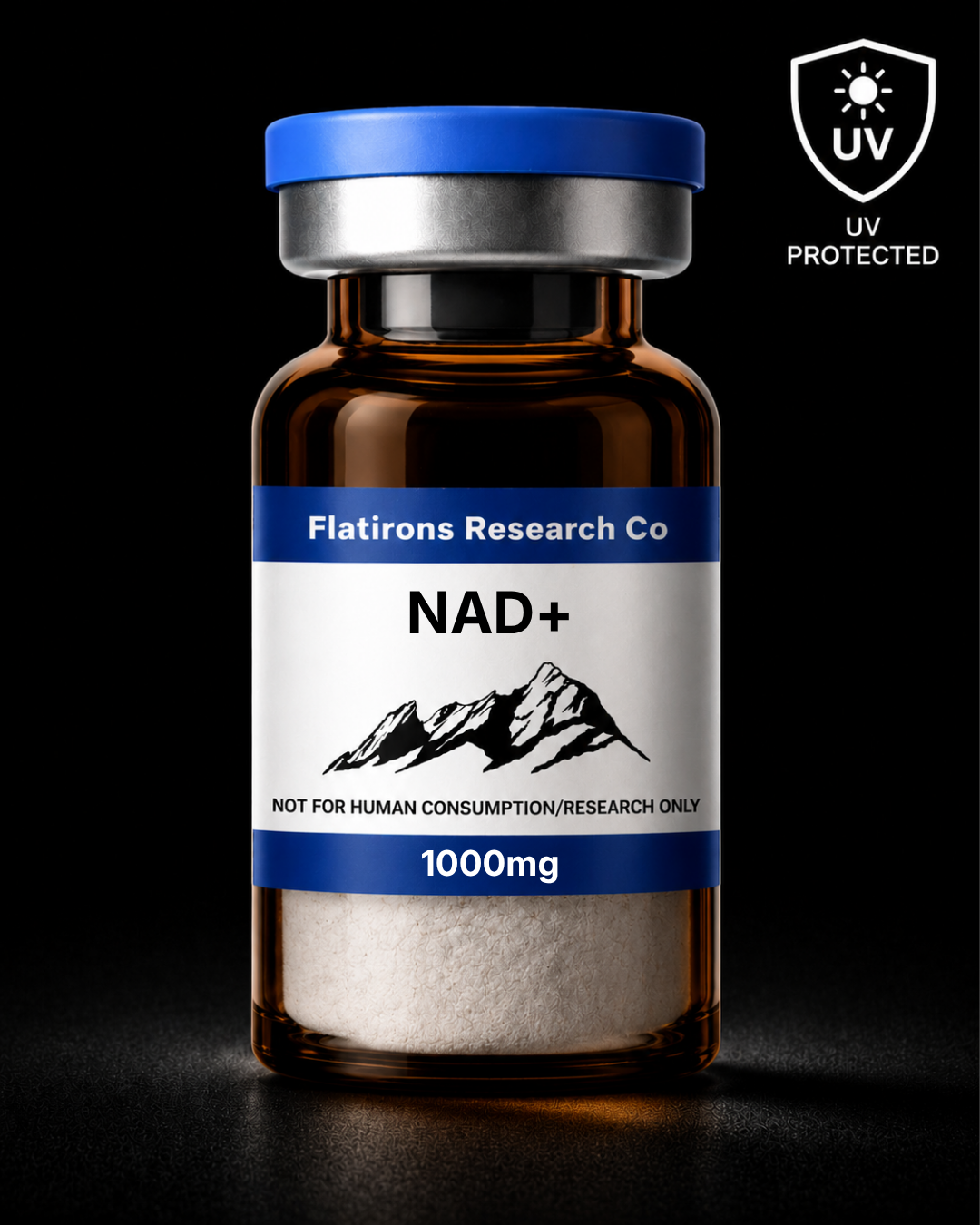
NAD+, 1000mg
$75.00
- Product Name: NAD+
- Molecular Formula: C21H27N7O14P2
- Molecular Weight: 663.43 g/mol
- Research Only: Yes
- Form: Lyophilized Solid
- Storage: Keep refrigerated upon reconstitution
Availability: 36 in stock
We offer free shipping for orders over $400
Nicotinamide adenine dinucleotide (NAD⁺) is a coenzyme widely studied in research settings for its role in cellular metabolism and redox reactions. It functions as a critical cofactor for enzymes such as sirtuins and poly(ADP-ribose) polymerases (PARPs), which are involved in processes including energy metabolism, DNA repair, and chromatin regulation.
Cellular and Metabolic Research
NAD⁺ has been extensively investigated for its role in maintaining cellular homeostasis and metabolic function. Experimental studies have explored how fluctuations in NAD⁺ levels may be associated with changes in redox balance, mitochondrial activity, and cellular stress responses. Observations indicate that NAD⁺ availability may vary under conditions such as aging and metabolic stress, though these relationships are complex and remain under investigation.
Aging and Longevity Research
NAD⁺ has been studied in preclinical models of aging, where it has been associated with pathways related to cellular maintenance and metabolic regulation. Research has examined the role of NAD⁺-dependent enzymes, including sirtuins and AMP-activated protein kinase (AMPK), in models of age-related physiological change. These findings are derived primarily from animal and in vitro studies and require further validation in human systems.
Metabolic and Cardiovascular Research
Alterations in NAD⁺ metabolism have been explored in relation to metabolic and cardiovascular models. Studies have investigated associations between NAD⁺ levels, mitochondrial function, and markers of metabolic activity under controlled conditions. These findings suggest potential links between NAD⁺ pathways and cellular energy regulation, though causative relationships have not been fully established.
Neurological Research
NAD⁺ has been examined in neurological research for its involvement in cellular signaling, mitochondrial function, and oxidative stress responses. Experimental models have explored its association with neuronal maintenance and signaling pathways relevant to neurodegenerative conditions. These observations remain preliminary and are not yet fully characterized across different disease models.
Mitochondrial Function
NAD⁺ plays a central role in mitochondrial metabolism and is required for the activity of several enzymes involved in energy production. Research has investigated mechanisms of NAD⁺ transport, synthesis, and utilization within mitochondria, as well as its relationship with cellular bioenergetics. These processes are active areas of ongoing study.
Oncology Research
NAD⁺ metabolism has been studied in oncology-related models, where it is associated with cellular energy pathways and metabolic adaptation. Research has explored how NAD⁺-dependent processes may influence tumor cell metabolism and interactions within the tumor microenvironment. These findings are based on preclinical investigations and require further validation.
NAD+ is not approved by the U.S. Food and Drug Administration for human use. Its safety, efficacy, and pharmacological profile have not been established in approved FDA clinical trials. This compound is intended strictly for laboratory research purposes and is not for human or veterinary use.
Lyophilized Peptides
These peptides are freeze-dried, a process that not only extends shelf life but also preserves the purity and integrity of the peptides during storage.
Disclaimer: For Research Purposes only
This content is provided strictly for research purposes and does not constitute an endorsement or recommendation for the non-laboratory application or improper handling of peptides designed for research. The information, including discussions about specific peptides and their researched benefits, is presented for informational purposes only and must not be construed as health, clinical, or legal guidance, nor an encouragement for non-research use. Peptides described here are solely for use in structured scientific study by authorized individuals. We advise consulting with research experts, medical practitioners, or legal counsel prior to any decisions about obtaining or utilizing these peptides. The expectation of responsible, ethical utilization of this information for legitimate investigative and scholarly objectives is paramount. This notice is dynamic and governs all provided content on research peptides.