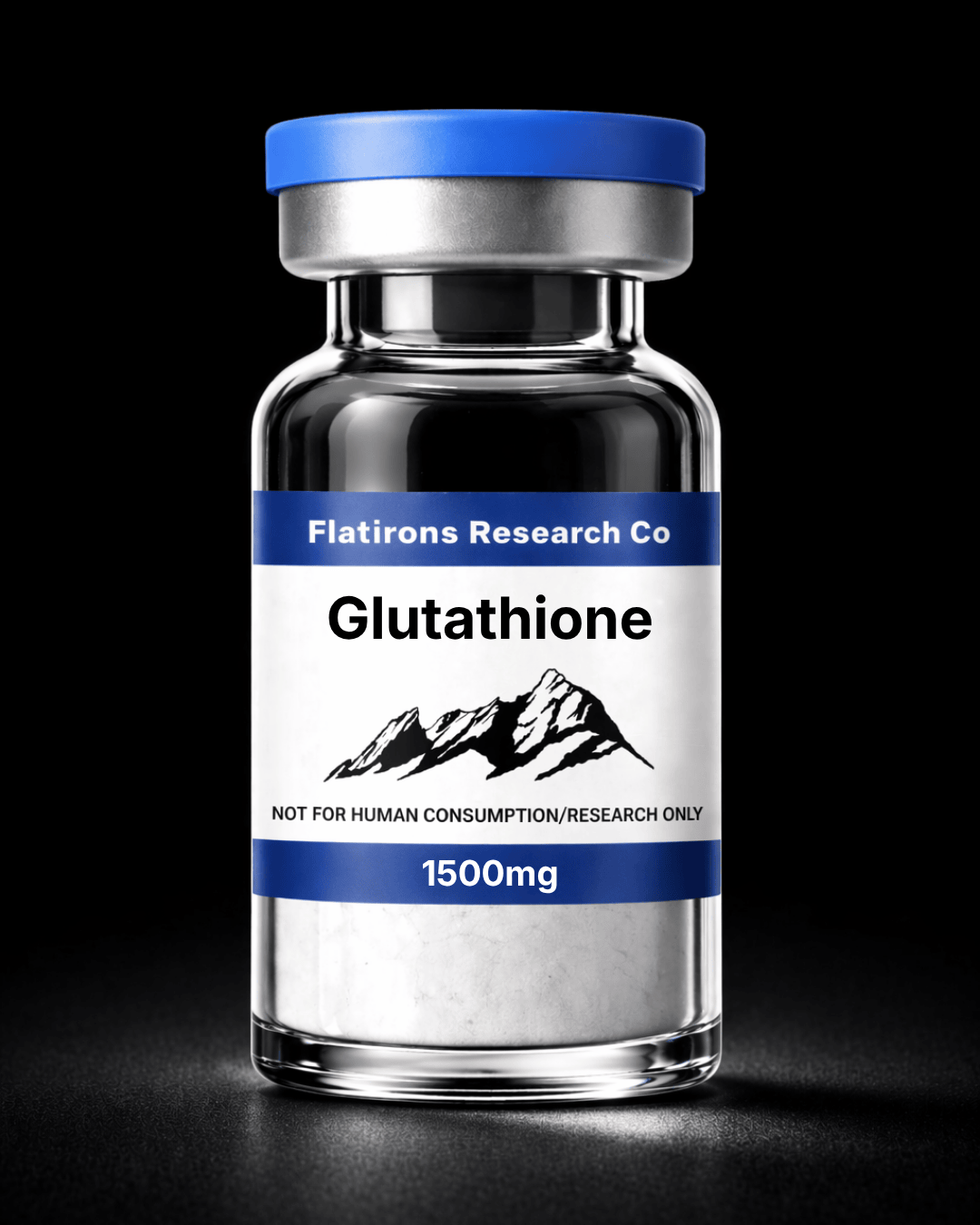
Glutathione, 1500mg
$60.00
- Product Name: Glutathione
- Sequence: y-Glu-Cys-Gly
- Molecular Formula: C10H17N3O6S
- Molecular Weight: 614.7 g/mol
- Research Only: Yes
- Form: Lyophilized Solid
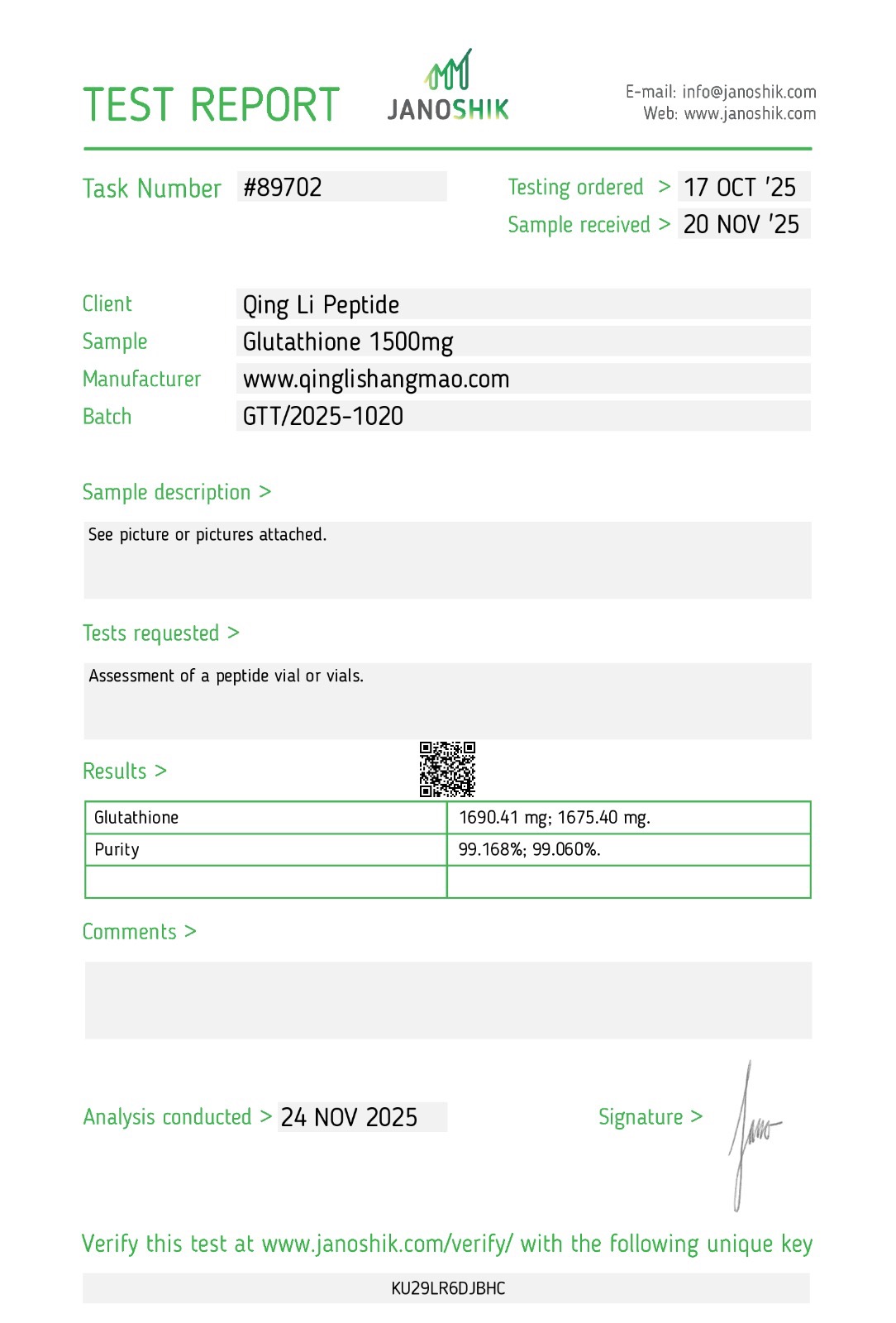
- Purity: >99%
- Storage: Keep refrigerated upon reconstitution
Availability: 27 in stock
We offer free shipping for orders over $400
Glutathione Description
Reduced L-Glutathione (GSH) is a tripeptide widely studied in research settings for its role in cellular redox balance and antioxidant defense systems. It is a key component of intracellular signaling and is commonly used as a biomarker in studies involving oxidative stress and cellular homeostasis.
Mechanistic Research
Glutathione has been extensively investigated for its role in neutralizing reactive oxygen species (ROS) through its thiol (-SH) group, which participates in redox reactions. In this process, reduced glutathione (GSH) is converted to its oxidized form (GSSG), contributing to cellular antioxidant capacity.
It also functions as a cofactor in enzymatic systems such as glutathione peroxidase and glutaredoxin, which are involved in maintaining protein function and regulating intracellular signaling pathways. Additionally, glutathione participates in phase II detoxification processes, where it is conjugated to various compounds to facilitate cellular processing and elimination.
The intracellular ratio of GSH to GSSG is commonly used in research as an indicator of cellular redox status, with shifts in this balance associated with oxidative stress responses.
Research Applications
Glutathione is frequently utilized in in vitro and experimental models to study oxidative stress, cellular resilience, and metabolic function. Research applications include investigations in cell types such as neurons, hepatocytes, and cardiomyocytes exposed to oxidative or toxic stressors. Endpoints often include measurements of cell viability, lipid peroxidation, protein oxidation, and intracellular redox balance.
In toxicology and liver-focused research, glutathione has been studied for its role in cellular responses to chemical stressors and metabolic byproducts. Experimental models often evaluate changes in enzyme activity, cellular integrity, and redox depletion under controlled conditions.
Glutathione has also been examined in immune-related research, where intracellular redox state is associated with immune cell signaling and cytokine expression. Studies have explored how modulation of glutathione levels may influence immune cell behavior in controlled laboratory environments.
Combination Research
Glutathione is often studied alongside other compounds in experimental settings. Examples include precursor compounds such as N-acetylcysteine (NAC), redox-active molecules like alpha-lipoic acid, and mitochondrial-targeted agents. These studies aim to evaluate interactions within the broader cellular antioxidant network.
Glutathione is not approved by the U.S. Food and Drug Administration for human use. Its safety, efficacy, and pharmacological profile have not been established in approved FDA clinical trials. This compound is intended strictly for laboratory research purposes and is not for human or veterinary use.
Lyophilized Peptides
These peptides are freeze-dried, a process that not only extends shelf life but also preserves the purity and integrity of the peptides during storage.
Disclaimer: For Research Purposes only
This content is provided strictly for research purposes and does not constitute an endorsement or recommendation for the non-laboratory application or improper handling of peptides designed for research. The information, including discussions about specific peptides and their researched benefits, is presented for informational purposes only and must not be construed as health, clinical, or legal guidance, nor an encouragement for non-research use. Peptides described here are solely for use in structured scientific study by authorized individuals. We advise consulting with research experts, medical practitioners, or legal counsel prior to any decisions about obtaining or utilizing these peptides. The expectation of responsible, ethical utilization of this information for legitimate investigative and scholarly objectives is paramount. This notice is dynamic and governs all provided content on research peptides.