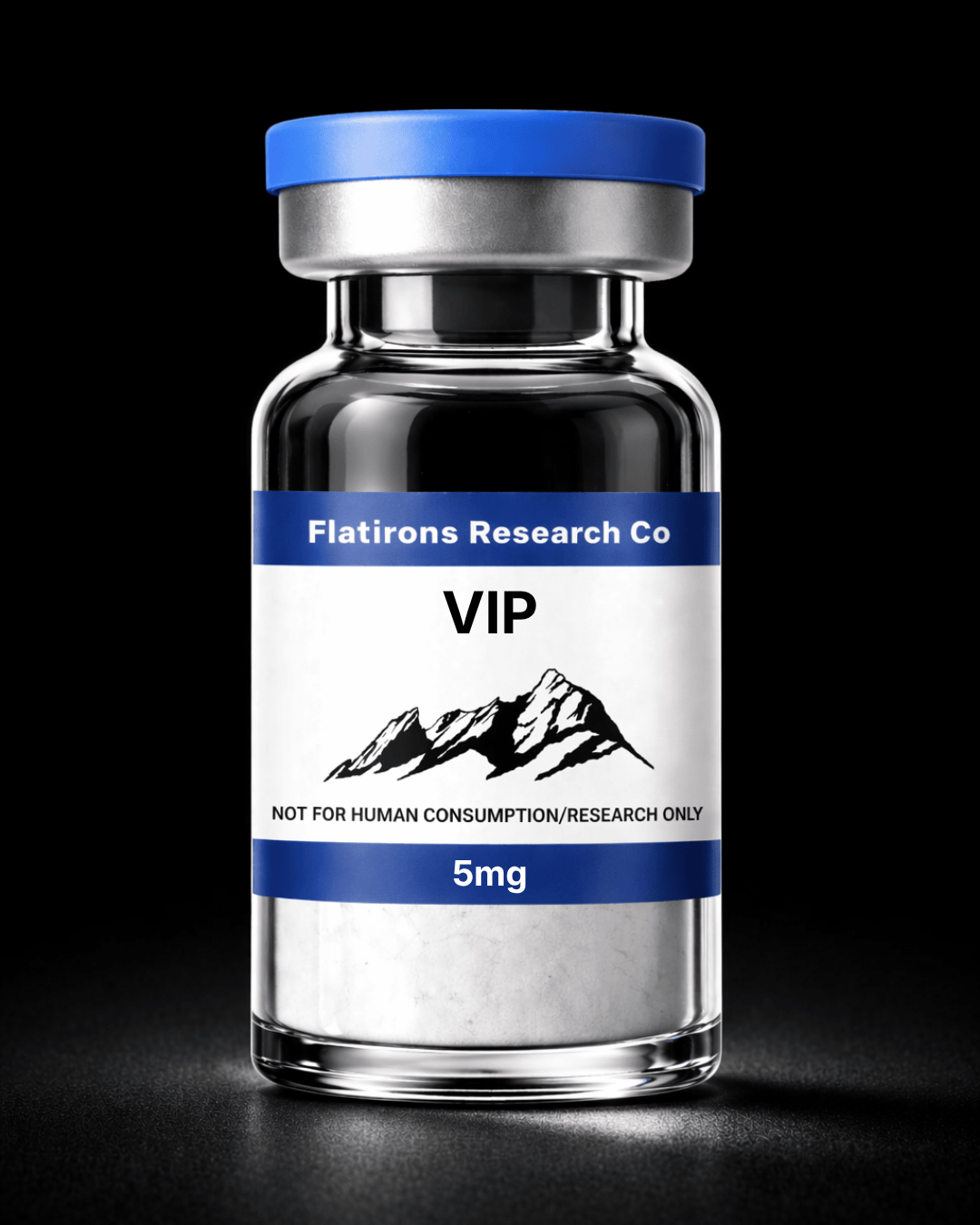
Vasoactive intestinal peptide (VIP) is a 28–amino acid peptide that has been widely studied in research settings for its involvement in multiple physiological systems. It interacts with specific receptors (VPAC1 and VPAC2) and is associated with signaling pathways that regulate cellular communication and homeostasis.
Cardiovascular Research
VIP has been investigated for its role in vascular signaling, including its interaction with VPAC receptors and downstream pathways related to nitric oxide activity. Experimental studies have explored its association with vascular tone, coronary circulation, and cardiac regulatory processes in controlled models.
Gastrointestinal Research
VIP has been studied for its involvement in gastrointestinal function, particularly in relation to smooth muscle activity and secretory processes. Research suggests it may influence motility and fluid regulation within the digestive system under experimental conditions.
Immune System Research
VIP has been examined for its potential role in immune signaling. Laboratory studies indicate it may interact with immune cells through VPAC receptors and has been associated with modulation of cytokine activity and immune cell behavior in controlled environments. These effects are context-dependent and remain under investigation.
Neurological Research
VIP has also been studied in neurological models, where it has been associated with cellular signaling processes and circadian rhythm regulation. Research has explored its interaction with receptor pathways in brain regions involved in timing and neurophysiological regulation, as well as its relationship with neuroimmune interactions.
Receptor and Signaling Mechanisms
VIP primarily exerts its effects through VPAC1 and VPAC2 receptor activation, which are linked to intracellular signaling pathways such as adenylate cyclase activation and cyclic AMP (cAMP) production. These pathways are involved in regulating a range of cellular responses across different tissue types.
VIP is not approved by the U.S. Food and Drug Administration for human use. Its safety, efficacy, and pharmacological profile have not been established in approved FDA clinical trials. This compound is intended strictly for laboratory research purposes and is not for human or veterinary use.