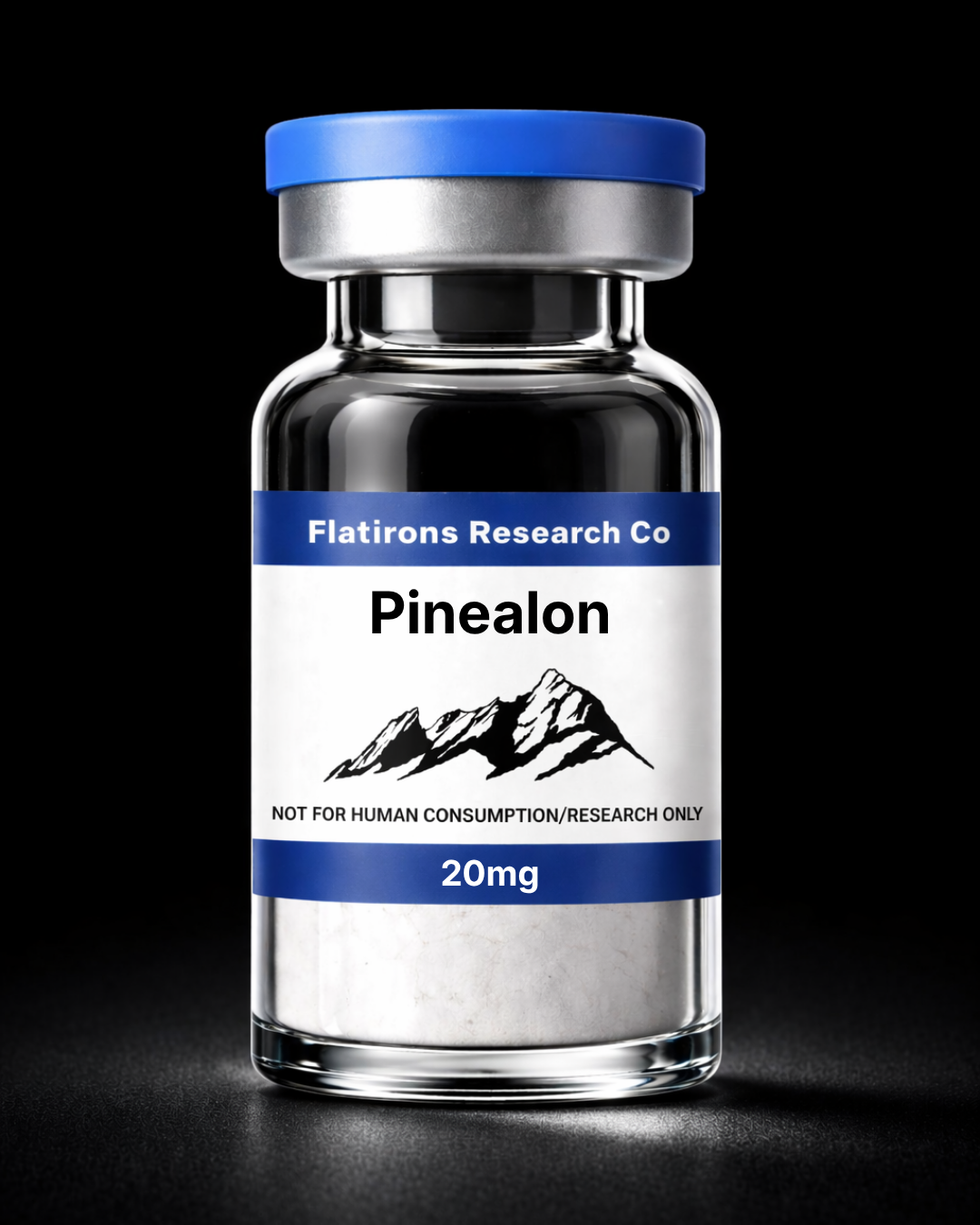
Pinealon, 20mg
$61.80
- Product Name: Pinealon
- Sequence: Glu-Asp-Arg
- Molecular Formula: C15H26N6O8
- Molecular Weight: 418.40 g/mol
- Research Only: Yes
- Form: Lyophilized Solid
- Purity: 99%
- Storage: Keep refrigerated upon reconstitution
Availability: 30 in stock
Bulk Pricing
- Buy 1 - 2 vials for $61.80 each
- Buy 3 - 4 vials for $58.71 each (5% off)
- Buy 5 - 7 vials for $55.62 each (10% off)
- Buy 8 - 11 vials for $54.38 each (12% off)
- Buy 12 - 15 vials for $52.53 each (15% off)
- Buy 16+ vials for $49.44 each (20% off)
We offer free shipping for orders over $400
Pinealon Description
Pinealon (Glu-Asp-Arg; EDR) is a synthetic tripeptide that has been investigated in preclinical research for its effects on cellular signaling, oxidative stress, gene regulation, and neurological function. Experimental studies have examined Pinealon in animal and cell models involving learning and memory, hypoxia, oxidative stress, neuroinflammation, and altered neurochemical activity.
Current findings are primarily derived from laboratory and animal research and should not be interpreted as evidence of established effects in humans.
Effects on Learning and Memory
Pinealon has been investigated for its effects on learning and memory in animal models. In rats with experimentally induced diabetes, researchers evaluated Pinealon using the Morris water maze, a behavioral test commonly used to study spatial learning and memory.
In this model, Pinealon was associated with improved retention of previously acquired skills at certain experimental doses. Researchers also observed changes in the expression of genes associated with NMDA receptor subunits, suggesting that Pinealon may influence molecular pathways involved in neuronal signaling and cognitive function.
Cellular Penetration and DNA Interaction
Laboratory research suggests that Pinealon and other short peptides may enter cells and interact with intracellular components, including DNA. Experimental studies have reported sequence-specific interactions, with Pinealon demonstrating an affinity for certain CAG-containing DNA sequences.
These observations have led researchers to investigate whether short peptides such as Pinealon may influence gene activity or other regulatory processes through direct interactions with DNA. Additional research is needed to determine the biological significance of these interactions.
Antioxidant and Neuroprotective Research
Pinealon has been studied in cellular and animal models involving oxidative stress. Experimental findings suggest that the peptide may limit the accumulation of reactive oxygen species (ROS) and influence cellular responses associated with oxidative damage.
Researchers have also observed effects on cell-cycle activity and cell survival under certain experimental conditions. In animal models involving prenatal hyperhomocysteinemia, Pinealon has been investigated for its effects on oxidative stress, neuronal function, and cognitive performance in offspring.
These findings remain preclinical and do not establish neuroprotective effects in humans.
Research on Hypoxic Stress
Pinealon has also been evaluated in experimental models of hypoxia, a condition in which tissues are exposed to reduced oxygen availability. In models of hypobaric hypoxia, researchers have reported changes in neuronal resistance to hypoxic stress and activity within endogenous antioxidant systems.
These findings have prompted investigation into Pinealon’s potential influence on cellular responses to oxygen deprivation, oxidative stress, and excitotoxic signaling.
Neuroinflammatory Research
Animal research has examined Pinealon in models involving acute hypoxic conditions and neuroinflammatory responses. Experimental findings have included changes in markers associated with neurogenesis and inflammation within nervous tissue.
These observations suggest that Pinealon may influence cellular pathways involved in the brain’s response to experimental stress and injury. However, the mechanisms and relevance of these findings to humans remain uncertain.
Effects on Neurochemical Signaling
Pinealon has been investigated in animal models involving hyperhomocysteinemia and altered neurochemical signaling. In female rats, researchers observed effects on the daily patterns of norepinephrine within the hypothalamus, a brain region involved in numerous neuroendocrine processes.
This research suggests that Pinealon may influence certain neurochemical regulatory pathways under experimental conditions. Further investigation is necessary to establish the mechanisms responsible for these observations and their broader significance.
Research Status
Research on Pinealon remains largely preclinical. Although laboratory and animal studies have reported biological activity involving oxidative stress, neuronal signaling, gene regulation, hypoxic responses, and neuroinflammatory pathways, these findings should not be interpreted as demonstrating clinical safety, efficacy, or therapeutic benefit in humans.
Pinealon is not approved by the U.S. Food and Drug Administration for human use. Its safety, efficacy, and pharmacological profile have not been established in approved FDA clinical trials. This compound is intended strictly for laboratory research purposes and is not for human or veterinary use.
Lyophilized Peptides
These peptides are freeze-dried, a process that not only extends shelf life but also preserves the purity and integrity of the peptides during storage.
Disclaimer: For Research Purposes only
This content is provided strictly for research purposes and does not constitute an endorsement or recommendation for the non-laboratory application or improper handling of peptides designed for research. The information, including discussions about specific peptides and their researched benefits, is presented for informational purposes only and must not be construed as health, clinical, or legal guidance, nor an encouragement for non-research use. Peptides described here are solely for use in structured scientific study by authorized individuals. We advise consulting with research experts, medical practitioners, or legal counsel prior to any decisions about obtaining or utilizing these peptides. The expectation of responsible, ethical utilization of this information for legitimate investigative and scholarly objectives is paramount. This notice is dynamic and governs all provided content on research peptides.