Research Peptide
5-Amino-1MQ
Alternative Name: 5-Amino, NNMT inhibitor
Molecular Structure
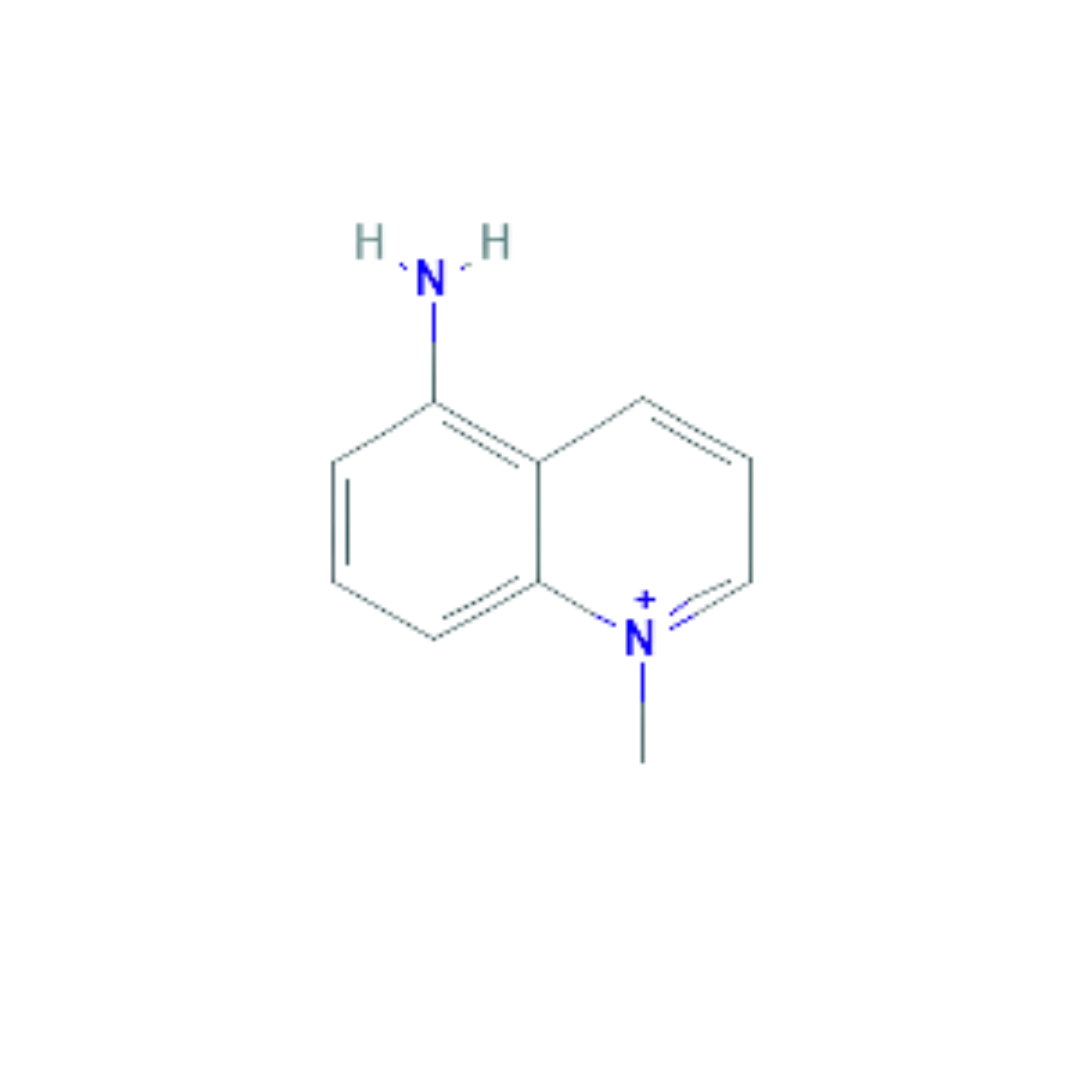
Chemical Properties
Molecular Mass: 159.21 g/mol
Molecular Formula: C10H11N2
CAS Number: 424912-40-5
Sequence: N/A
- 5-Amino-1MQ does not have an amino acid sequence because it is a synthetic small molecule organic compound, not a peptide.
Half-Life: Approxmately 6-12 hours
Typical Purity: >98%
Overview
5-Amino-1MQ is a small-molecule research compound that has been examined in laboratory studies as an inhibitor of nicotinamide N-methyltransferase (NNMT), a cytosolic enzyme found in several tissue types. It is included in research libraries as a chemical tool for probing NNMT-related biology in experimental models.
Research Background
NNMT was identified by researchers as an enzyme that transfers a methyl group from S-adenosyl-L-methionine (SAM) to nicotinamide, generating 1-methylnicotinamide (1-MNA) and S-adenosyl-L-homocysteine (SAH). Because this reaction sits at a junction between methylation chemistry and nicotinamide/NAD+ metabolism, NNMT drew scientific interest as a potential regulator of broader cellular processes.
A 2014 study examining reduced NNMT activity in fat cell models reported changes in body composition, glucose handling, and energy expenditure measures in mice. This work helped establish NNMT as a molecular target for further mechanistic study. Quinolinium-based NNMT inhibitors, including 5-Amino-1MQ, were subsequently reported in the scientific literature beginning in the late 2010s as chemical tools for testing this target in cell and animal models.
Mechanism of Action
Published research describes 5-Amino-1MQ as a substrate-competitive NNMT inhibitor, meaning it interacts with the region of the enzyme responsible for binding nicotinamide and SAM. By occupying this site, the compound has been reported to interfere with NNMT’s catalytic activity in experimental systems.
Because NNMT sits within both methylation chemistry (via SAM/SAH) and nicotinamide handling (linked to NAD+ salvage), inhibiting the enzyme has been studied as a way to examine downstream effects across several connected cellular pathways rather than a single isolated mechanism.
Research Areas
Published laboratory research involving 5-Amino-1MQ has explored several biological systems:
- Metabolism and adipose tissue biology: Studies in diet-induced obesity models in mice have examined fat tissue accumulation, glucose handling, and liver triglyceride levels following NNMT inhibition.
- Skeletal muscle biology: Preclinical research has investigated NNMT’s role in muscle stem cell activity, muscle tissue regeneration models, and age-related changes in muscle physiology.
- NAD+ and methylation pathways: Because NNMT consumes both nicotinamide and SAM, laboratory studies have used 5-Amino-1MQ to probe how NNMT inhibition intersects with NAD+ salvage biochemistry and cellular methylation balance.
- Oncology-related models: NNMT expression changes have been observed in certain cancer cell models, prompting some laboratory investigation of NNMT inhibition in this context.
Only research areas supported by published preclinical literature are reflected here.
Research Status
5-Amino-1MQ remains an investigational research compound. Published findings to date are derived from in vitro and animal model systems; results observed in these models cannot be assumed to translate to other biological systems. Limited published clinical research exists, but additional investigation is needed to further characterize its biological properties.
NNMT itself is a well-characterized enzyme with defined catalytic activity, but the broader physiological role of NNMT inhibition — and the significance of findings from preclinical models — continues to be an active area of scientific inquiry.
Regulatory Status
5-Amino-1MQ is an investigational research compound and has not been approved by the U.S. Food and Drug Administration (FDA). It is not evaluated by the World Anti-Doping Agency (WADA) for a defined regulatory category at this time. This compound is intended strictly for laboratory research use.
Laboratory Storage
- Store as a dry powder in a sealed container, protected from light and moisture.
- General laboratory reference sources indicate stability at room temperature for short-term handling, with refrigeration (2–8°C) or freezing recommended for longer-term storage.
- Reconstituted or solubilized material (e.g., in DMSO or aqueous buffer) is generally handled per standard laboratory practice for small-molecule reagents and stored frozen when not in immediate use.
- Laboratories should follow their own standard operating procedures and the specific certificate of analysis for the lot in question.
Research Use Only: 5-Amino-1MQ is intended exclusively for laboratory research and analytical purposes. It is an investigational research compound and has not been approved by the U.S. Food and Drug Administration (FDA).
Related Compounds and Research Pathways
Research Context: Compounds listed below share areas of scientific investigation or molecular signaling. Inclusion does not indicate compatibility, combined use, or a recommendation to combine research compounds. Relationships describe similarities or differences reported in published research.
Overlapping Research Pathways:
- NAD+: 5-Amino-1MQ and NAD+ have been investigated in research involving cellular NAD+ metabolism and the NAD+ salvage pathway. NNMT activity can influence the availability of nicotinamide, a molecule involved in NAD+ recycling. Researchers have examined how changes in NNMT activity may affect NAD+-related metabolic signaling, mitochondrial function, and cellular energy pathways. Additional research is needed to fully characterize this relationship.
- L-Carnitine: 5-Amino-1MQ and L-Carnitine have been studied in research involving cellular energy and lipid metabolism, although they act through different molecular pathways. 5-Amino-1MQ has primarily been investigated in relation to NNMT activity and NAD+-associated metabolic signaling, while L-Carnitine is involved in the transport of long-chain fatty acids into mitochondria for fatty-acid oxidation. These compounds therefore share broader areas of metabolic research without an established direct molecular interaction.
Related Research Areas:
- Semaglutide/Tirzepetide/Retatrutide: These compounds have been studied in research involving metabolic regulation, nutrient signaling, and energy balance. Their mechanisms involve GLP-1 receptor signaling, while tirzepatide also targets GIP receptors and retatrutide additionally targets glucagon receptors. These overlapping research pathways allow investigators to examine how different receptor systems influence glucose and lipid metabolism, cellular energy regulation, and metabolic signaling.
Opposing Pathways:
- N/A
Frequently Asked Questions
- What is 5-Amino-1MQ? It is a small-molecule quinolinium derivative studied in laboratory research as an inhibitor of the enzyme nicotinamide N-methyltransferase (NNMT).
- What has 5-Amino-1MQ been researched for? Published laboratory studies have examined it in experimental models related to adipose tissue biology, glucose metabolism, skeletal muscle biology, and NAD+/methylation pathways.
- How does 5-Amino-1MQ work? Research describes it as a substrate-competitive inhibitor that interacts with the nicotinamide- and SAM-binding region of the NNMT enzyme, interfering with its catalytic activity in experimental systems.
- What makes 5-Amino-1MQ unique among NNMT-targeting compounds? It has been characterized in published literature as a selective, substrate-site-targeting NNMT inhibitor, distinguishing it from earlier non-selective methyltransferase inhibitors used in research.
- Is 5-Amino-1MQ approved by the FDA? No. It is an investigational research compound and has not been approved by the U.S. Food and Drug Administration for any use.
- What is known about the half-life of 5-Amino-1MQ? Limited published clinical research exists, but additional investigation is needed to further characterize its biological properties.
- Does 5-Amino-1MQ have an amino acid sequence? No. Unlike peptides, 5-Amino-1MQ is a small-molecule quinolinium compound and does not have an amino acid sequence.
- How should 5-Amino-1MQ be stored in a laboratory setting? General laboratory guidance calls for storage as a sealed, dry powder protected from light and moisture, with refrigeration or freezing for longer-term stability. Laboratories should refer to the certificate of analysis for lot-specific handling.
- What is the current state of research on 5-Amino-1MQ? Current evidence is derived from in vitro and animal model studies. NNMT is a well-studied enzyme, but the broader significance of NNMT inhibition remains an active research question, and preclinical findings have not been established in other model systems.
- What areas continue to be investigated? Ongoing published research continues to examine NNMT’s role in metabolic signaling, skeletal muscle biology, NAD+ salvage pathways, and cellular methylation processes.
Research Use Only: 5-Amino-1MQ is intended exclusively for laboratory research and analytical purposes. It is an investigational research compound and has not been approved by the U.S. Food and Drug Administration (FDA).
Research Use Only
This information is provided for educational and scientific research purposes only. Products offered by Flatirons Research Co are intended strictly for laboratory and research use and are not intended for human or veterinary use, consumption, diagnosis, treatment, or prevention of disease. Nothing on this page constitutes medical advice, dosing guidance, or a recommendation for clinical use.