Research Peptide
Epithalon
Alternative Name: Epitalon
Sequence Length: 4 amino acid sequence
Molecular Structure
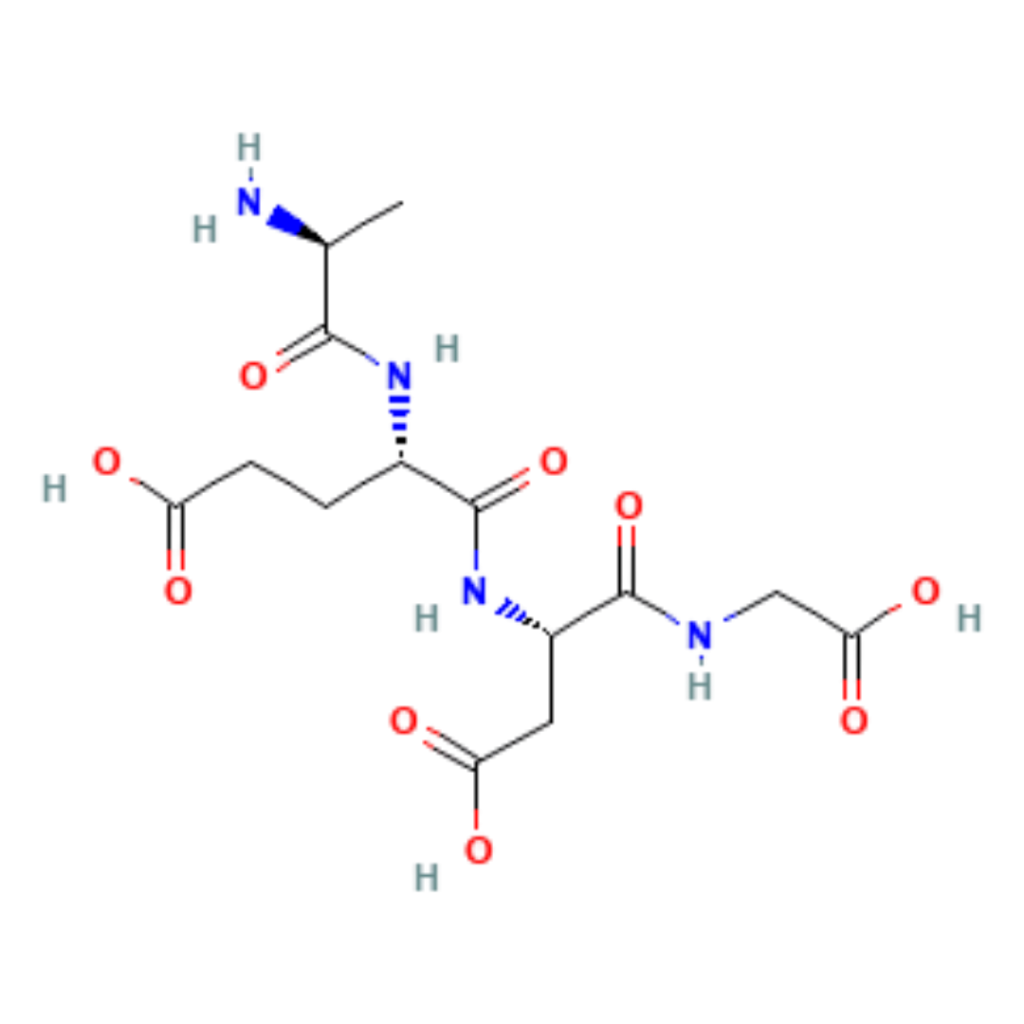
Chemical Properties
Molecular Mass: 390.35 g/mol
Molecular Formula: C14H22N4O9
CAS Number: 307297-39-8
Sequence: Ala-Glu-Asp-Gly
Half-Life: minutes to hours
Typical Purity: >98%
Administration Routes: Subcutaneous
Overview
Epithalon (also spelled Epitalon) is a synthetic tetrapeptide composed of the amino acid sequence Ala-Glu-Asp-Gly (AEDG). It was developed as a simplified analog of epithalamin, a peptide preparation originally isolated from the pineal gland and investigated by researchers at the St. Petersburg Institute of Bioregulation and Gerontology. Since its introduction in the 1980s, Epithalon has been studied in laboratory and preclinical research for its potential influence on cellular aging, gene regulation, telomere biology, and circadian signaling.
Published research has examined Epithalon in cultured human cells, animal models, and a limited number of human studies. Much of the available literature originates from a single Russian research group, while independent replication in Western laboratories remains limited. As a result, several proposed biological mechanisms continue to be investigated, and additional research is needed to better define their relevance across different experimental systems.
Current scientific interest in Epithalon centers on three primary areas of investigation: regulation of telomerase activity, interactions with pineal signaling pathways involved in circadian biology, and potential effects on gene expression through direct interactions with DNA and chromatin. These mechanisms remain active areas of research, and their significance outside experimental models has not been fully established.
Research Use Only: Epithalon is intended exclusively for laboratory research and analytical purposes. It is an investigational research compound and has not been approved by the U.S. Food and Drug Administration (FDA).
Mechanism of Action
The molecular mechanism of Epithalon has not been completely characterized, and multiple biological pathways have been proposed based on findings from cell culture, animal research, and limited human investigations. Current evidence suggests that the peptide may influence cellular processes involved in gene regulation, circadian signaling, and telomere biology rather than acting through a single receptor or signaling pathway.
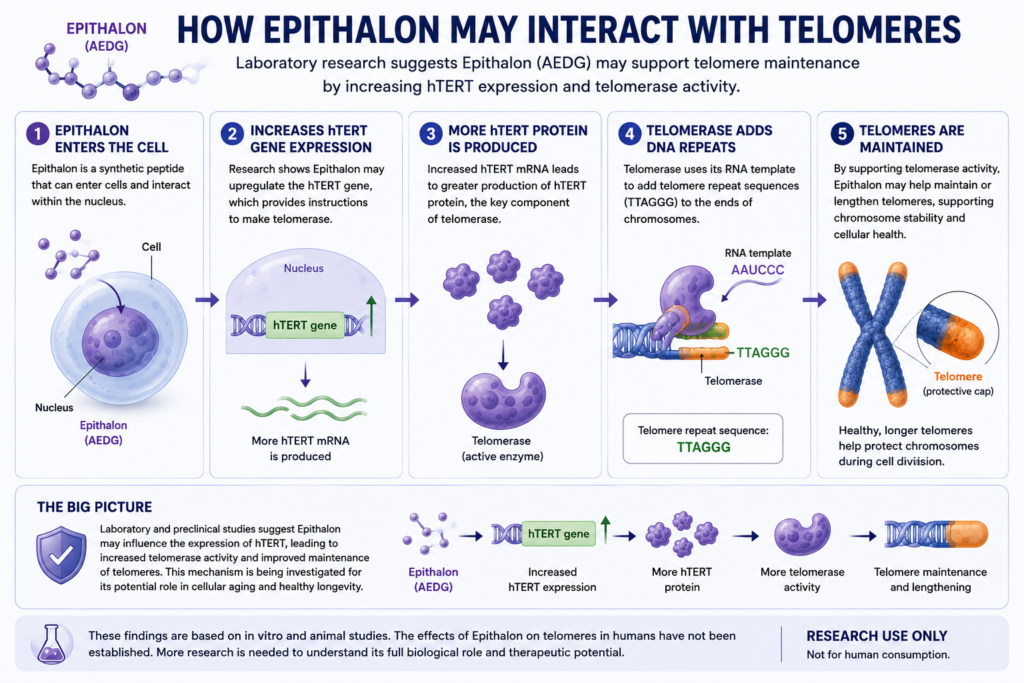
One of the most extensively studied mechanisms involves telomerase regulation. In cultured human fibroblasts, researchers reported that Epithalon increased expression of the human telomerase reverse transcriptase (hTERT) gene, leading to measurable telomerase activity in cells that normally lacked detectable enzyme expression. This response is believed to occur through changes in gene regulation rather than by functioning as a telomerase enzyme itself. Investigators have proposed that altered hTERT expression may influence cellular pathways involved in chromosome maintenance, although the precise molecular events responsible for this response remain under investigation.
Epithalon has also been examined for its interaction with pineal signaling. Because it was developed from the pineal peptide preparation epithalamin, researchers have investigated whether it influences biological pathways associated with circadian regulation. Experimental studies involving epithalamin have reported changes in melatonin secretion patterns, suggesting that related peptides may interact with molecular systems involved in circadian timing. However, much of the human evidence has been reported for epithalamin rather than the isolated AEDG tetrapeptide, and the extent to which these findings apply specifically to Epithalon requires additional investigation.
Another proposed mechanism involves direct interactions with DNA and chromatin. Laboratory studies have shown that AEDG is capable of entering the cell nucleus and binding specific DNA sequences. Researchers have suggested that these interactions could influence gene transcription by altering chromatin organization or accessibility. This proposed epigenetic mechanism has been investigated as a possible explanation for observed changes in gene expression, although the complete biological significance of these findings has not yet been established.
Animal studies have further examined how these molecular pathways relate to broader biological processes, including chromosome stability, cellular senescence, and age-associated changes in gene regulation. While published investigations have reported measurable biological activity in several experimental models, the magnitude and consistency of these findings vary among species and study designs. Additional independent research is needed to clarify the peptide’s molecular targets, downstream signaling pathways, and relevance beyond preclinical laboratory investigations.
Research Use Only: Epithalon is intended exclusively for laboratory research and analytical purposes. It is an investigational research compound and has not been approved by the U.S. Food and Drug Administration (FDA).
Telomeres and Epithalon
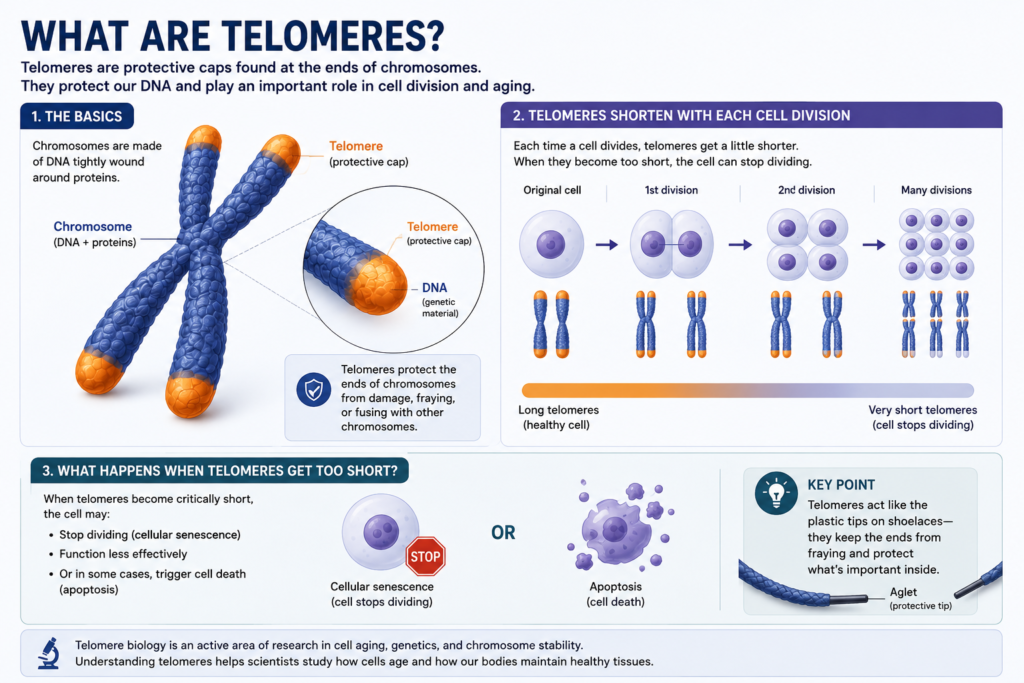
Telomeres are protective caps found at the ends of chromosomes. Chromosomes carry DNA, which contains the genetic instructions that cells use to function. A simple way to think about telomeres is to imagine the plastic tips on the ends of shoelaces. Just as those plastic tips help keep shoelaces from fraying, telomeres help protect the ends of chromosomes from becoming damaged or sticking to other chromosomes.
Each time a cell divides, its DNA must be copied. During this process, telomeres naturally become a little shorter. When they become very short, the cell may stop dividing or enter a state known as cellular senescence, where it remains alive but no longer continues to divide. This shortening is considered a normal part of cellular biology and has been widely studied in aging and cell research.
Researchers have investigated whether Epithalon interacts with this process by influencing telomerase, an enzyme that helps maintain telomeres. In laboratory studies using cultured human cells, Epithalon was reported to increase expression of the human telomerase reverse transcriptase (hTERT) gene, which produces the active component of telomerase. As telomerase activity increased, researchers observed maintenance and, in some experiments, lengthening of telomeres in cultured cells.
Current evidence suggests that Epithalon does not function as telomerase itself. Instead, researchers propose that it may influence the genes that control telomerase production. These findings have been observed primarily in laboratory cell culture experiments, and additional research is needed to determine how this mechanism operates in more complex biological systems.
Research Use Only: Epithalon is intended exclusively for laboratory research and analytical purposes. It is an investigational research compound and has not been approved by the U.S. Food and Drug Administration (FDA).
What are Telomeres
Epithalon Interaction
Research Papers
Peptide promotes overcoming of the division limit in human somatic cell
Khavinson VKh, Bondarev IE, Butyugov AA, Smirnova TD. Peptide promotes overcoming of the division limit in human somatic cell. Bull Exp Biol Med. 2004 May;137(5):503-6. doi: 10.1023/b:bebm.0000038164.49947.8c. PMID: 15455129.
Related Compounds and Research Pathways
Research Context: Compounds listed below share areas of scientific investigation or molecular signaling. Inclusion does not indicate compatibility, combined use, or a recommendation to combine research compounds. Relationships describe similarities or differences reported in published research.
Overlapping Research Pathways:
- GHK-Cu: Epithalon and GHK-Cu have both been studied in research involving gene activity and cellular signaling. Epithalon research has focused on telomere biology, gene regulation, and circadian rhythms, while GHK-Cu has been investigated for gene expression, tissue signaling, and extracellular matrix activity. These compounds share related areas of cellular research but act through different proposed mechanisms.
- MOTS-c: Epithalon and MOTS-c have both been studied in research involving cellular metabolism and gene regulation. Epithalon research has examined telomere biology and gene activity, while MOTS-c research has focused on mitochondrial signaling and metabolic pathways. Their research areas overlap in how cells regulate energy and gene activity.
- Thymosin Alpha-1: Epithalon and Thymosin Alpha-1 have both been studied in research involving cellular signaling and gene regulation. Epithalon research has focused on telomere biology and gene activity, while Thymosin Alpha-1 has been investigated mainly in immune-cell signaling and immune-related pathways. Their research overlaps in the study of how cells control and respond to biological signals.
- NAD+: Epithalon and NAD+ have both been studied in research involving gene regulation and normal cellular processes. Epithalon research has examined telomere biology and gene activity, while NAD+ research has focused on cellular energy, enzyme activity, and metabolic signaling. These research areas overlap in the study of how cells regulate energy and gene activity.
Related Research Areas:
- DSIP: DSIP and Epithalon have both been studied in research involving sleep cycles and the body’s biological clock. DSIP research has focused on sleep-related and nervous system signaling, while Epithalon has been investigated in circadian rhythm, pineal gland, and telomere biology. These compounds share related areas of biological rhythm research but act through different proposed mechanisms.
Opposing Pathways:
- Researchers have identified the need for further investigation in experimental models involving malignancy, autoimmune disease, pregnancy and developmental biology, advanced renal dysfunction, and altered immune function. Additional well-designed studies are required to better characterize the peptide’s biological activity across diverse experimental conditions.
Frequently Asked Questions
- What is Epithalon? Epithalon (also called Epitalon) is a synthetic tetrapeptide with the amino acid sequence Ala-Glu-Asp-Gly (AEDG). It was developed as a short-chain analog of the pineal peptide preparation epithalamin and has been investigated in laboratory research involving telomere biology, gene regulation, circadian signaling, and cellular aging.
- What is Epithalon’s mechanism of action? The complete mechanism has not been fully established. Published studies suggest Epithalon may influence several biological pathways, including hTERT gene expression, telomerase activity, DNA interactions, and pineal signaling. Most evidence comes from cell culture and preclinical research, and additional studies are needed to better understand these molecular pathways.
- What are telomeres, and why are they important? Telomeres are protective DNA structures located at the ends of chromosomes. They help preserve chromosome stability during cell division by preventing chromosome ends from becoming damaged or joining with one another. Because telomeres naturally shorten over time, they are widely studied in research involving cell biology and aging.
- How has Epithalon been studied in relation to telomeres? Researchers have investigated whether Epithalon influences telomerase, an enzyme involved in maintaining telomeres. Laboratory studies using cultured human cells reported increased hTERT expression and measurable telomerase activity following exposure to Epithalon. These findings have primarily been observed in cell culture models and require further investigation.
- Does Epithalon activate telomerase? Published laboratory research suggests Epithalon may increase hTERT gene expression, which is the gene responsible for producing the catalytic component of telomerase. Researchers propose this may increase telomerase activity, although the precise molecular mechanism has not been fully characterized.
- Does Epithalon bind directly to DNA? Laboratory studies have reported that the AEDG peptide can enter the cell nucleus and bind certain DNA sequences. Researchers have proposed that these interactions may influence gene expression through epigenetic mechanisms, although additional research is needed to determine their biological significance.
- Is Epithalon the same as epithalamin? No. Epithalamin is a peptide extract originally derived from the pineal gland, while Epithalon (AEDG) is a synthetic four-amino-acid peptide designed to reproduce some of the biological activity investigated for epithalamin. Although related, they are distinct research compounds.
- Why is Epithalon associated with circadian rhythm research? Because Epithalon was developed from the pineal peptide preparation epithalamin, researchers have investigated whether it influences biological pathways involved in melatonin regulation and circadian signaling. Most human research in this area has involved epithalamin rather than the isolated AEDG peptide.
- What types of studies have been conducted on Epithalon? Epithalon has been investigated in cell culture experiments, animal models, and a limited number of human studies. Much of the published literature originates from a single Russian research group, and broader independent replication remains limited.
- Is the biological activity of Epithalon fully understood? No. Although published studies have identified several proposed molecular targets, including telomerase regulation, gene expression, and DNA interactions, the complete mechanism remains under investigation. Additional independent laboratory and clinical research is needed to clarify how these findings apply across different biological systems.
Research Use Only: Epithalon is intended exclusively for laboratory research and analytical purposes. It is an investigational research compound and has not been approved by the U.S. Food and Drug Administration (FDA).
Research Use Only
This information is provided for educational and scientific research purposes only. Products offered by Flatirons Research Co are intended strictly for laboratory and research use and are not intended for human or veterinary use, consumption, diagnosis, treatment, or prevention of disease. Nothing on this page constitutes medical advice, dosing guidance, or a recommendation for clinical use.