Research Peptide
Retatrutide
Alternative Name: Triple Agonist, GLP-3
Sequence Length: 39 amino acid sequence
Molecular Structure
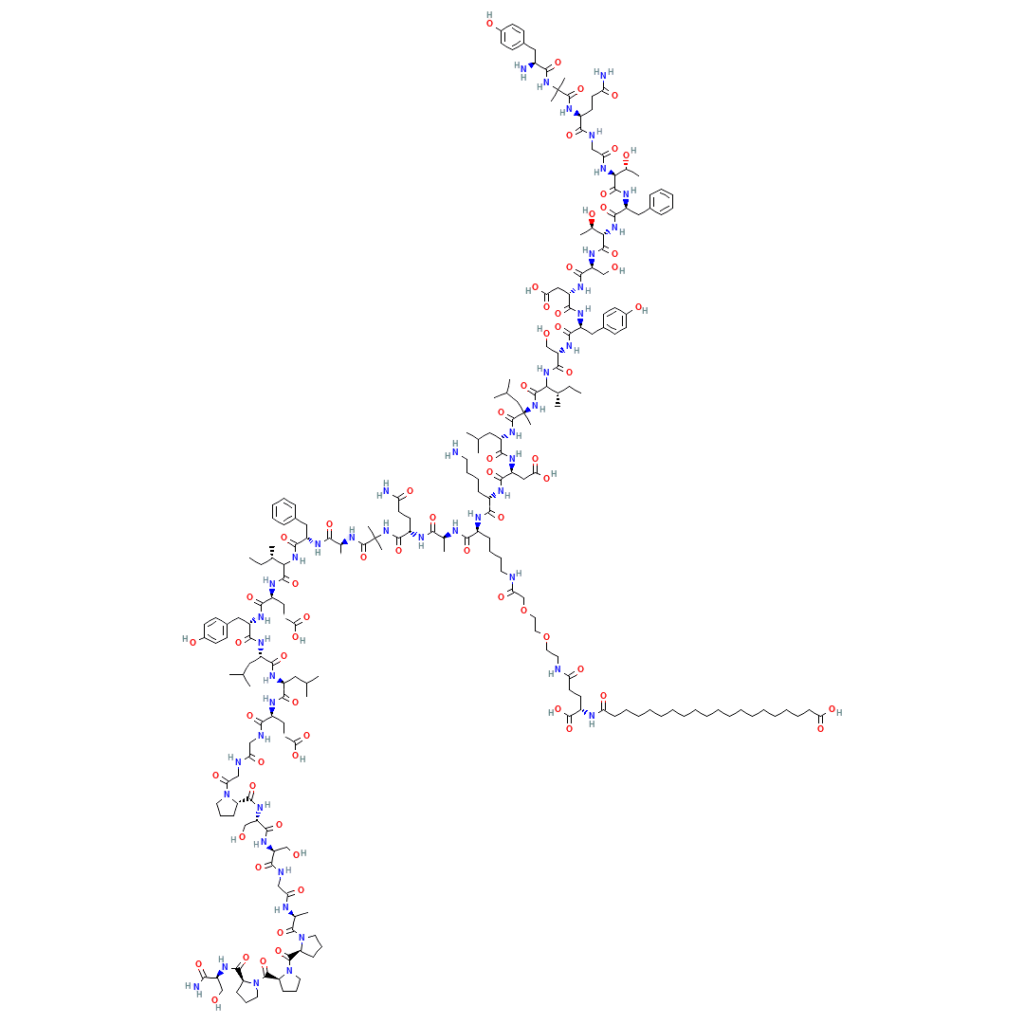
Chemical Properties
Molecular Mass: 4731 g/mol
Molecular Formula: C221H342N46O68
CAS Number: 2381294-46-4
Sequence: YAQGTFTSDYSILLDKKAQAAFIEYLLEGGPSSGAPPPS
Half-Life: approximately 6 days
Typical Purity: >98%
Administration Routes: subcutaneous
Overview
Retatrutide is a synthetic 39-amino-acid peptide designed to activate three related receptors: the glucagon-like peptide-1 receptor (GLP-1R), glucose-dependent insulinotropic polypeptide receptor (GIPR), and glucagon receptor (GCGR). It is commonly described as a triple receptor agonist because a single molecule has measurable activity at all three receptor systems. Retatrutide has a molecular weight of approximately 4731 g/mol and is identified by CAS No. 2381294-46-4.
The amino acid sequence of retatrutide is commonly represented in simplified form as:
YAQGTFTSDYSILLDKKAQAAFIEYLLEGGPSSGAPPPS
Retatrutide contains non-standard amino acid residues and a lipid-containing side chain, so a simplified one-letter sequence does not fully represent its chemical structure. The lipid modification includes a C20 fatty diacid-containing group designed to promote interaction with albumin. Researchers have examined how this structural modification influences peptide stability, distribution, and pharmacokinetic properties.
Retatrutide was developed from research involving the glucagon peptide family and has attracted scientific interest because it combines three metabolic signaling pathways within a single molecule. GLP-1R, GIPR, and GCGR are G protein-coupled receptors involved in nutrient sensing, glucose and lipid metabolism, pancreatic signaling, liver metabolism, and cellular energy regulation.
Research Background
Published research involving retatrutide has included laboratory, preclinical, and clinical investigations. Researchers have examined its biological activity in several areas, including:
- GLP-1 receptor signaling
- GIP receptor signaling
- Glucagon receptor signaling
- Glucose and lipid metabolism
- Pancreatic cell signaling
- Liver metabolism
- Adipose tissue biology
- Cellular energy regulation
- Multi-receptor pharmacology
One of the main areas of research involves the interaction between GLP-1R, GIPR, and GCGR signaling. These receptors participate in different but overlapping metabolic pathways. Retatrutide allows researchers to examine how simultaneous activation of all three receptor systems influences cellular communication and downstream molecular signaling.
Researchers have also examined the glucagon receptor component because it distinguishes retatrutide from compounds that primarily target GLP-1R or both GLP-1R and GIPR. Experimental research involving GCGR has focused on liver metabolism, fatty-acid oxidation, glucose-related signaling, and cellular energy regulation.
Research Status
Retatrutide remains an investigational compound. Published research has examined its receptor pharmacology, molecular signaling, metabolic activity, and structural properties. Research continues to investigate how the individual GLP-1, GIP, and glucagon receptor components contribute to its overall biological activity.
Although these receptor systems are individually well characterized, the biological interactions produced by their simultaneous activation are complex. Additional research is needed to better define the contribution of each receptor and the molecular pathways associated with combined triple-receptor signaling.
Regulatory Status
Retatrutide is an investigational compound and is not approved by the U.S. Food and Drug Administration (FDA).
Its regulatory status may change as scientific and regulatory review continues.
Laboratory Storage
Retatrutide used for laboratory research may be supplied in lyophilized (freeze-dried) form.
Storage recommendations can vary depending on formulation, purity, packaging, and manufacturer. Researchers should follow the storage and handling information provided with the specific research material to maintain stability and integrity throughout laboratory use.
Research Use Only: Retatrutide is intended exclusively for laboratory research and analytical purposes. It is an investigational research compound and has not been approved by the U.S. Food and Drug Administration (FDA).
Mechanism of Action
Retatrutide has been characterized as an agonist of three related receptors: the glucagon-like peptide-1 receptor (GLP-1R), glucose-dependent insulinotropic polypeptide receptor (GIPR), and glucagon receptor (GCGR). These receptors belong to the G protein-coupled receptor (GPCR) family and participate in cellular pathways involved in nutrient sensing and metabolic regulation. Researchers have investigated retatrutide because it allows all three receptor systems to be studied using a single molecular structure.
A major signaling pathway shared by these receptors involves the stimulatory G protein known as Gs. Receptor activation can stimulate the enzyme adenylyl cyclase, which increases intracellular levels of cyclic adenosine monophosphate (cAMP). cAMP acts as a chemical messenger inside cells and can activate downstream proteins, including protein kinase A (PKA). These pathways influence enzyme activity, gene expression, ion channels, and other cellular processes.
Fatty-acid oxidation is the cellular process through which fatty acids are broken down and their stored chemical energy is made available to the cell. Experimental research has examined how GCGR signaling influences enzymes and gene-regulatory pathways involved in this process. Researchers have also investigated glucagon signaling in adipose tissue and the nervous system, although the biological importance of these pathways can differ among experimental models.
An important area of research involves the combined activation of GLP-1R, GIPR, and GCGR. Although these receptors have different biological functions, their signaling networks overlap. All three can influence cAMP-related pathways while also affecting broader networks involved in gene expression, enzyme activity, glucose metabolism, lipid metabolism, and cellular energy sensing.
Researchers have examined whether simultaneous activation of these three receptors produces different patterns of molecular signaling compared with activation of GLP-1R alone or combined GLP-1R/GIPR signaling. This multi-receptor activity is a central feature of current research involving retatrutide.
The molecular structure of retatrutide also contains a lipid-based side chain that promotes interaction with albumin. Albumin is a common blood protein capable of binding and transporting many different molecules. Researchers have investigated this structural feature because albumin binding can influence peptide stability, distribution, enzymatic breakdown, and other pharmacokinetic properties.
Additional research continues to examine how GLP-1R, GIPR, and GCGR signaling interact at the cellular level. Researchers are also investigating receptor-specific activity, downstream gene expression, lipid-related pathways, liver signaling, nervous system signaling, and the contribution of individual receptors to the compound’s overall biological activity.
Overall, current evidence indicates that retatrutide exhibits complex biological activity involving the coordinated signaling of GLP-1R, GIPR, and GCGR. Rather than acting through a single molecular target, its activity reflects interactions among three related receptor systems and their downstream cellular pathways. Additional research is needed to fully characterize these interactions and determine the molecular contribution of each receptor.
Research Use Only: Retatrutide is intended exclusively for laboratory research and analytical purposes. It is an investigational research compound and has not been approved by the U.S. Food and Drug Administration (FDA).
GLP-1R Interaction
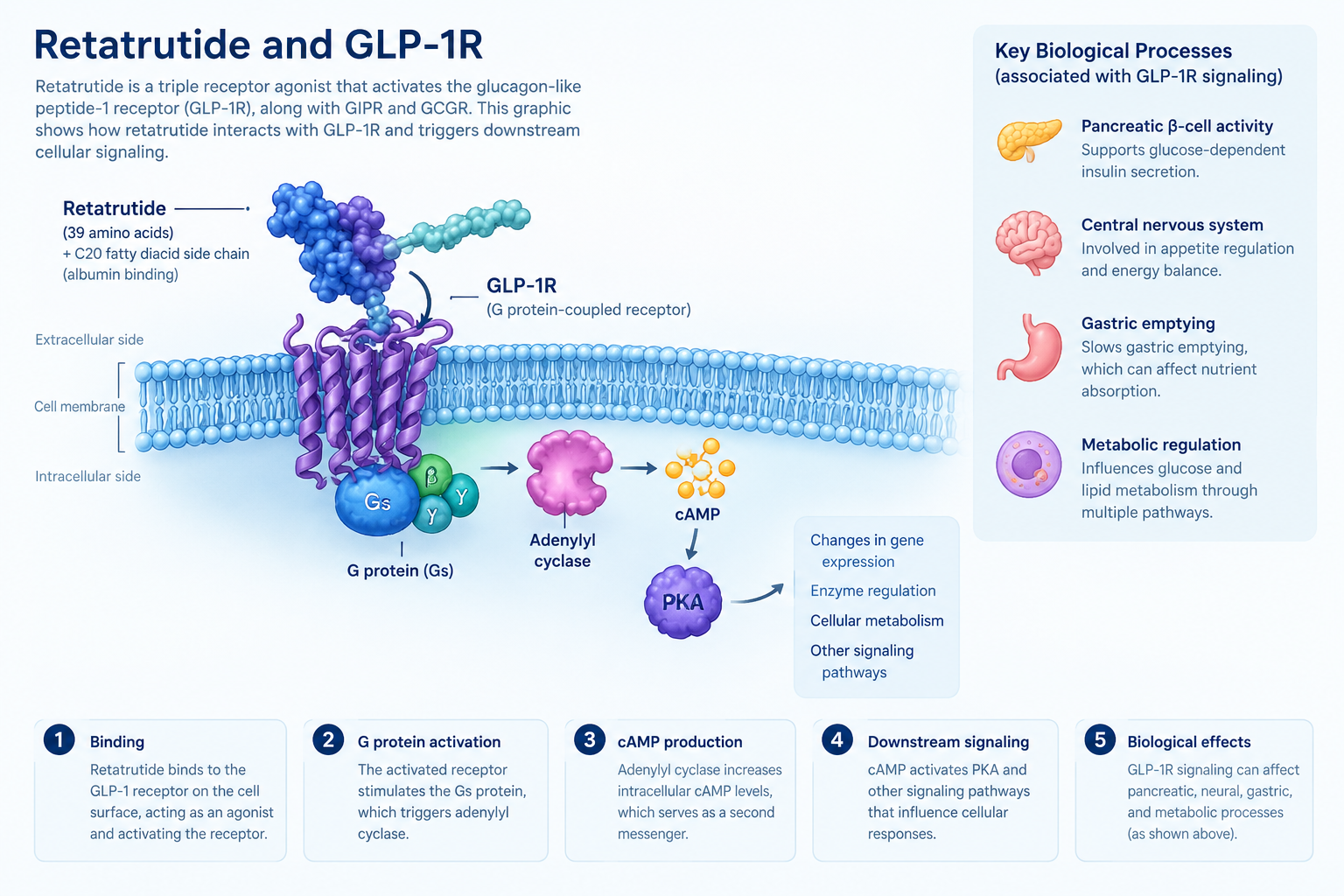
Researchers have examined Retatrutide’s interaction with glucagon-like peptide-1 receptor (GLP-1R), which is expressed in pancreatic cells, regions of the nervous system, and several other tissues. GLP-1R signaling has been investigated for its relationship with pancreatic beta-cell activity, nutrient-responsive signaling, and communication between peripheral tissues and the central nervous system.
Key Biological Processes:
Pancreatic β-cell activity: Supports glucose-dependent insulin secretion.
Central Nervous System: Involved in appetite regulation and energy balance.
Gastric Emptying: Slows gastric emptying, which can affect nutrient absorption.
Metabolic Regulation: Influences glucose and lipid metabolism through multiple pathways.
GIPR Interaction
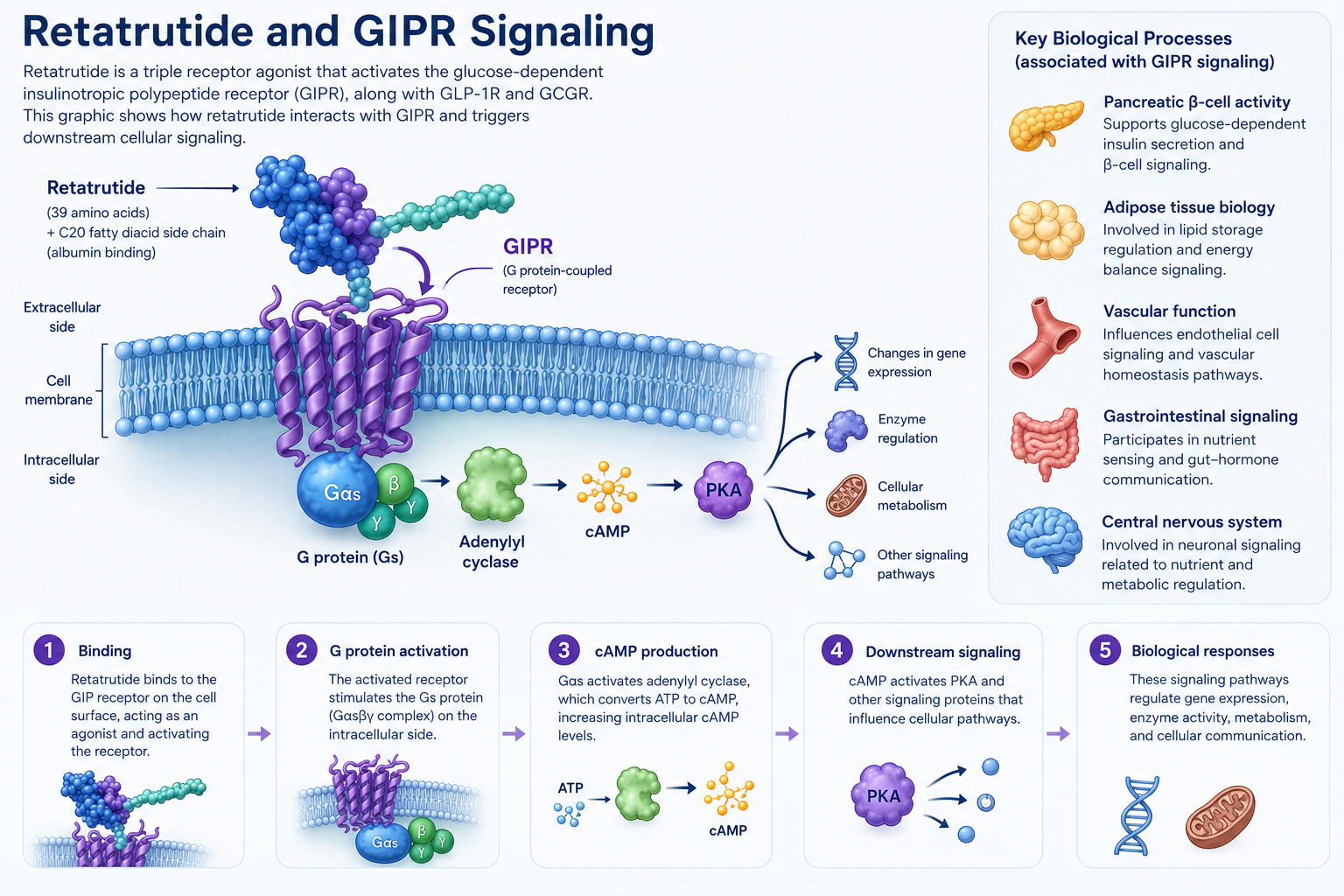
Retatrutide also activates glucose-dependent insulinotropic polypeptide receptor (GIPR), another receptor that primarily communicates through Gs and cAMP signaling. GIP receptors are expressed in pancreatic cells, adipose tissue, and other metabolically active tissues. Researchers have examined GIPR signaling in relation to pancreatic cell communication, lipid metabolism, nutrient storage, and cellular responses to changes in energy availability.
Key Biological Processes:
Pancreatic β-cell activity: Supports glucose-dependent insulin secretion and β-cell signaling.
Adipose tissue biology: Involved in lipid storage regulation and energy balancing signaling.
Vascular function: Influences endothelial cell signaling and vascular homeostasis pathways.
Gastrointestinal signaling: Participates in nutrient sensing and gut-hormone communication.
Central nervous system: Involved in neuronal signaling related to nutrient and metabolic regulation.
GCGR Interaction
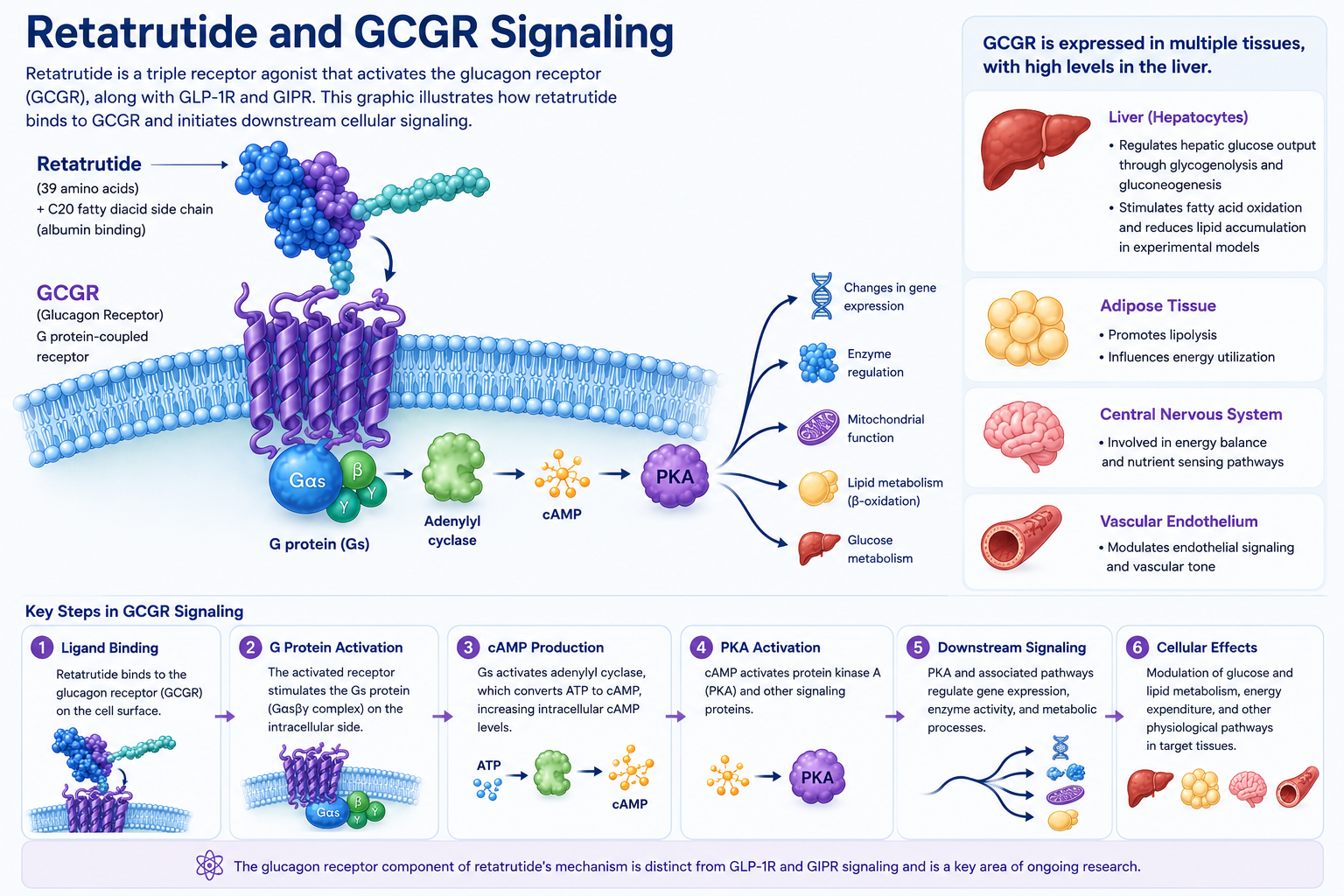
The glucagon receptor (GCGR) represents an important part of retatrutide’s molecular design. GCGR is strongly expressed in liver cells called hepatocytes and also signals primarily through the Gs/cAMP pathway. Researchers have examined glucagon receptor signaling in relation to hepatic glucose metabolism, fatty-acid oxidation, lipid processing, and cellular energy regulation.
Key Biological Processes:
Liver (Hepatocytes): Regulates hepatic glucose output through glycogenolysis and gluconeogenesis. Stimulates fatty acid oxidation and reduces lipid accumulation in experimental models.
Adipose Tissue: Promotes lipolysis and influences energy utilization.
Central Nervous System: Involved in energy balance and nutrient sensing pathways.
Vascular Endothelium: Modulates endothelial signaling and vascular tone.
Research Papers
Frequently Asked Questions
1. What is Retatrutide?
Retatrutide is a synthetic peptide developed for research into metabolic signaling. It is classified as a triple receptor agonist because it activates three related receptors: the GLP-1 receptor (GLP-1R), GIP receptor (GIPR), and glucagon receptor (GCGR). Researchers have studied this combined receptor activity to better understand how these signaling pathways interact in metabolic tissues.
2. How does Retatrutide work?
Retatrutide interacts with GLP-1R, GIPR, and GCGR, which are members of the G protein-coupled receptor family. Activation of these receptors can stimulate Gs proteins, adenylyl cyclase, and the intracellular messenger cyclic AMP (cAMP). These signaling pathways are involved in pancreatic cell activity, nutrient sensing, lipid and glucose metabolism, liver signaling, and cellular energy regulation. Researchers are studying how simultaneous activation of all three receptors changes cellular signaling compared with activation of one or two receptors alone.
3. How is Retatrutide different from Semaglutide?
One of the main differences is the number of receptor systems involved. Semaglutide primarily acts as a GLP-1 receptor agonist, while retatrutide has been designed to activate GLP-1R, GIPR, and GCGR. The addition of GIP and glucagon receptor activity allows researchers to investigate a broader set of molecular pathways, including those associated with pancreatic signaling, liver metabolism, lipid processing, and energy regulation. Retatrutide should therefore not be considered simply another GLP-1 receptor agonist; its triple-receptor pharmacology is an important distinction.
4. How is Retatrutide different from Tirzepatide?
Tirzepatide and retatrutide both interact with GLP-1 and GIP receptors, but retatrutide also activates the glucagon receptor. Tirzepatide is therefore described as a dual GIP/GLP-1 receptor agonist, while retatrutide is a triple GIP/GLP-1/glucagon receptor agonist. Researchers are particularly interested in the added GCGR component because glucagon signaling is involved in liver metabolism, substrate use, and cellular energy regulation.
5. Why is Retatrutide called a triple agonist?
The term triple agonist refers to retatrutide’s ability to activate three different receptors with a single molecule: GIPR, GLP-1R, and GCGR. An agonist is a molecule that binds to a receptor and activates its signaling pathway. Retatrutide’s structure was specifically engineered so researchers could investigate the combined biological activity of these three receptor systems.
6. What is the role of the glucagon receptor in Retatrutide research?
The glucagon receptor is particularly important because it distinguishes retatrutide from dual GLP-1/GIP receptor agonists. GCGR is strongly expressed in the liver, where glucagon signaling influences cAMP-dependent pathways involved in glucose metabolism, fatty-acid oxidation, substrate use, and cellular energy regulation. Researchers are examining how GCGR signaling interacts with the GLP-1 and GIP components of retatrutide’s receptor profile.
7. What is the amino acid sequence of Retatrutide?
Retatrutide is a 39-amino-acid synthetic peptide. Its structure contains modified amino-acid residues as well as a fatty diacid-containing side chain.
Because of these modifications, a standard one-letter amino acid sequence does not completely represent the molecule’s chemical structure. Published descriptions of retatrutide therefore include its peptide sequence together with its non-standard residues and lipid modification.
8. Why does Retatrutide contain a fatty diacid side chain?
Retatrutide contains a fatty diacid moiety that promotes interaction with albumin, a common protein found in blood. Albumin binding can influence how peptide molecules are distributed, protected from enzymatic breakdown, and cleared in experimental systems. Published pharmacokinetic research has reported an approximately 6-day half-life for retatrutide. Researchers continue to study how its structural modifications influence receptor activity and pharmacokinetic behavior.
9. What areas of research involve Retatrutide?
Researchers have investigated retatrutide in studies involving GLP-1, GIP, and glucagon receptor signaling, as well as glucose metabolism, lipid metabolism, liver biology, pancreatic signaling, adipose tissue, and cellular energy regulation. Research has progressed through laboratory, preclinical, and clinical studies. As of August 2026, Lilly reports that retatrutide is being investigated across several Phase 3 research programs.
10. Is Retatrutide FDA-approved?
No. Retatrutide is not currently approved by the U.S. Food and Drug Administration (FDA) and remains an investigational compound.
Research Use Only: Retatrutide is intended exclusively for laboratory research and analytical purposes. It is an investigational research compound and has not been approved by the U.S. Food and Drug Administration (FDA).
Research Use Only
This information is provided for educational and scientific research purposes only. Products offered by Flatirons Research Co are intended strictly for laboratory and research use and are not intended for human or veterinary use, consumption, diagnosis, treatment, or prevention of disease. Nothing on this page constitutes medical advice, dosing guidance, or a recommendation for clinical use.